
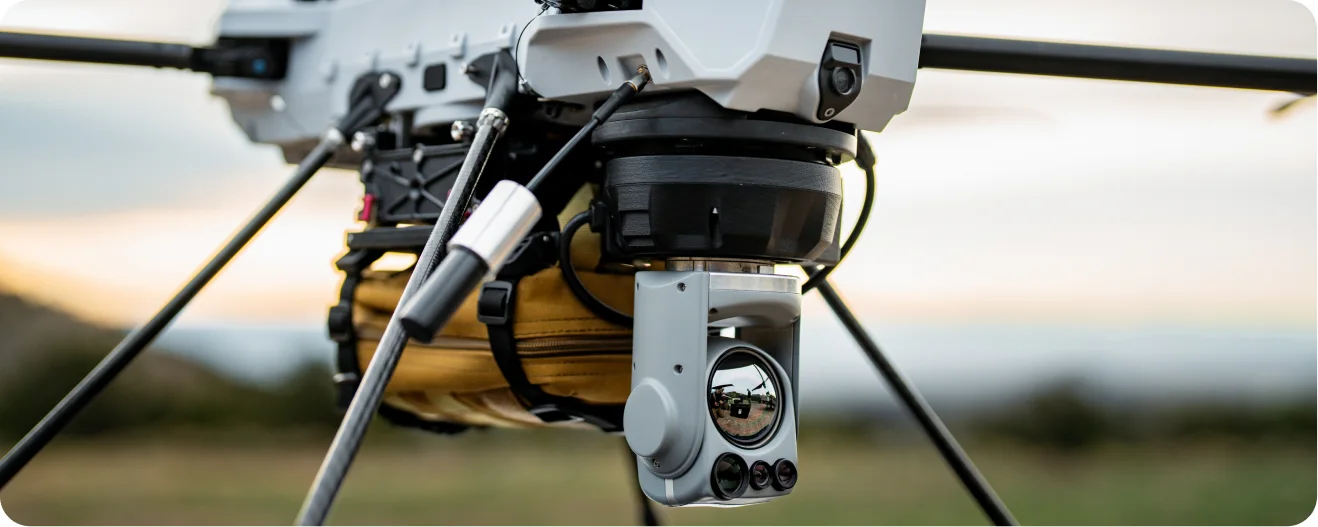
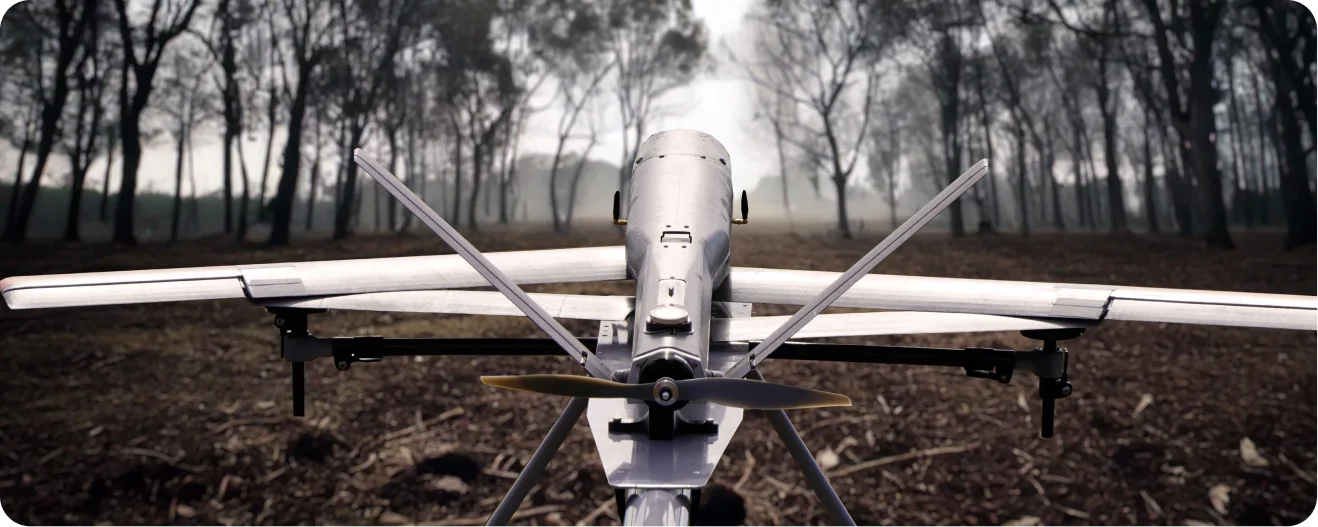
UAV anti-jamming and mesh for interceptor swarms
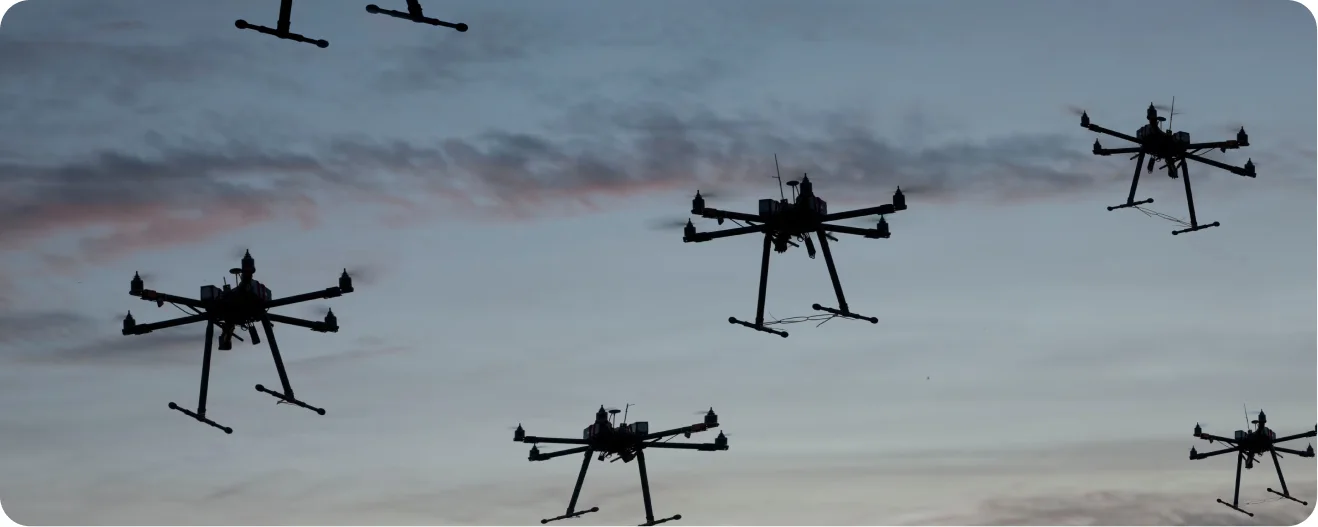
How anti-jam features and mesh networking impact interceptor and FPV drones, and how Doodle Labs approaches these challenges.
Setting the stage: Digital radios bring anti-jam and other features to FPV and interceptors that fixed-frequency analog links lack:
- Interceptor drones have become their own category, with much of the demand shaped by the war in Ukraine.
- They chase small, fast targets, and the operator needs clear video to confirm the target before the end of the flight. The radio carrying that video often faces deliberate jamming, and it also has to fit on an airframe with very little weight to spare.
Why it matters: An interceptor that loses its video link late in the flight cannot confirm its target. For these missions, link resilience sits at the top of the requirements list.
In this blog: This post looks at how UAV anti-jamming works on the radio itself, and how mesh networking changes the picture when several interceptors fly together.
It also covers where analog and fiber still fit, the Doodle Labs approach, and considerations for drone system engineers when assessing radios for this class of airframe.
What counter UAS / interceptor missions ask of the communications link:
Interceptor and higher-end FPV mission requirements put several demands on one radio at once:
- Video to confirm the target: Target confirmation depends on a clear picture at the end of the flight, when the link is under the most pressure.
- Control on the same link: Video and command and control move over one radio, so a jammed link costs both.
- Low weight: Every gram the radio adds comes out of speed or flight time.
- Security: Digital radio links must be encrypted to ensure they are harder to intercept than an open analog feed.
Latency matters too, though the radio is only part of it. The encoder and decoder drive most of the glass-to-glass delay, so a fair comparison looks at the whole video chain.
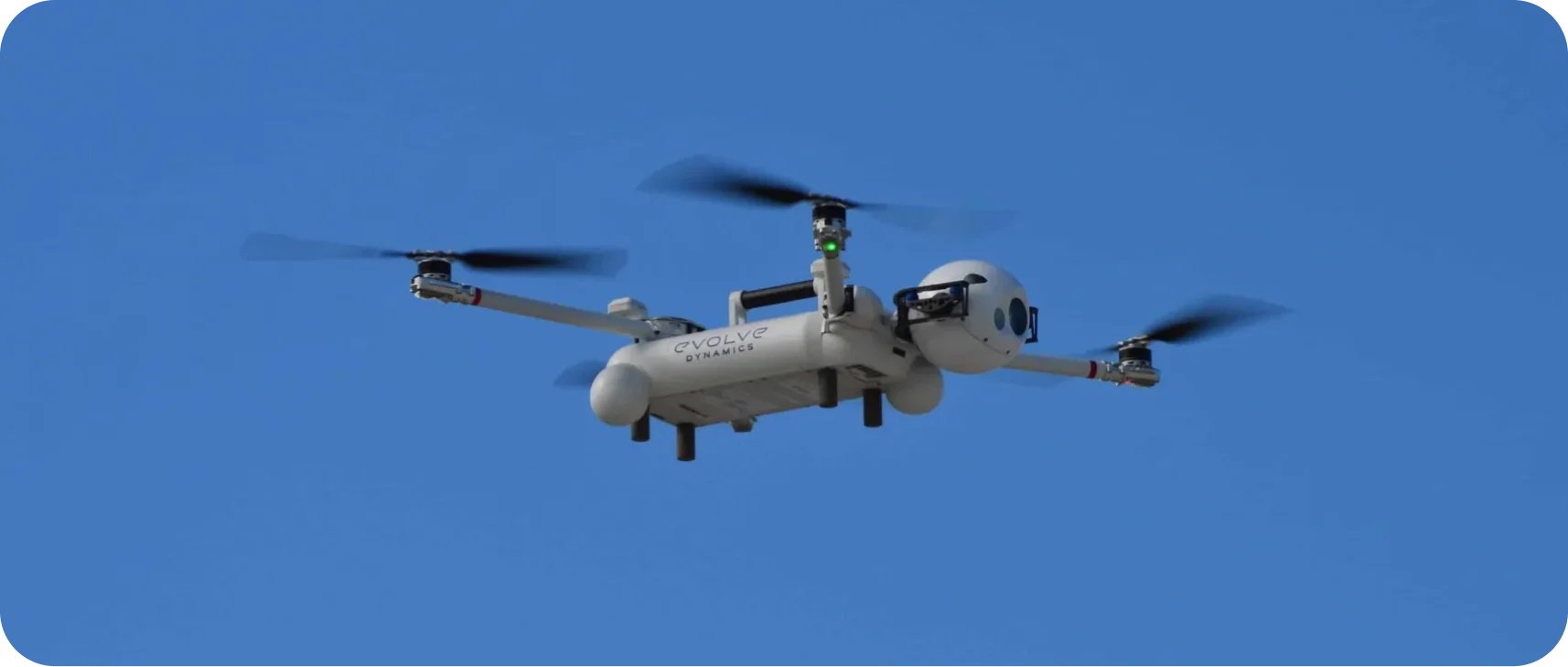
How jamming affects FPV and interceptor links
A jammer raises the noise on the frequencies a link uses. Once the wanted signal can no longer rise above that noise, video breaks up first and control follows. Our explainer on drone jamming covers the basics.
An analog link sends one unencrypted feed on a fixed frequency, so it has nowhere to go when that frequency fills with noise, whereas a digital radio with frequency agility can move. For a drone engineer, key questions to ask based on mission needs are how quickly the radio notices trouble, and where it can move to when jammed.
Mesh networking for interceptor swarms
The other key consideration for interceptor swarms is mesh networking. A single interceptor talks to its ground station. However, several interceptors working together raise a different problem, since each aircraft needs a path back even as others move, drop out or get jammed.
A mesh network lets drones talk directly to each other as well as to the operator. And in battlefield environments, mesh and anti-jamming also must work together, creating important factors for drone systems engineers to consider when assessing communications and connectivity providers.
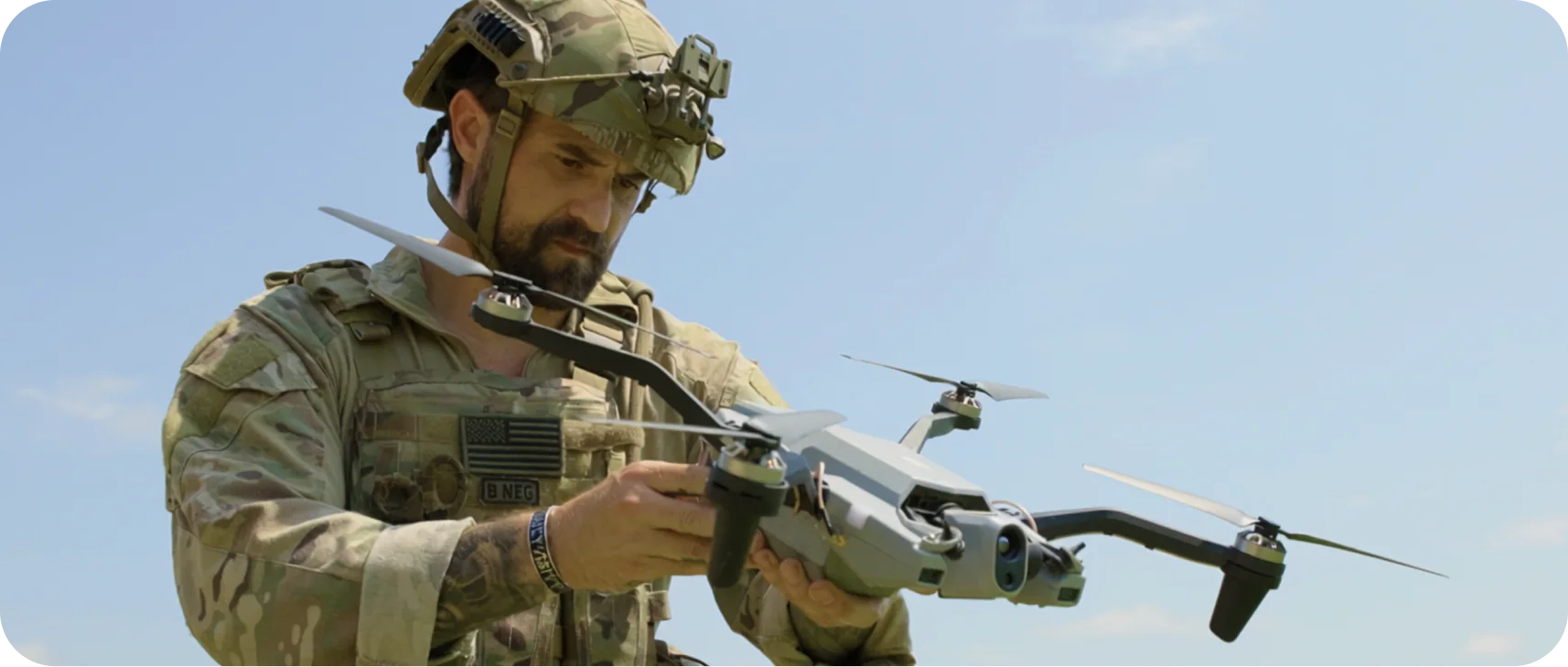
The Doodle Labs approach: Anti-jamming with Sense EW plus powerful mesh capability.
Electronic warfare resilience: On Mesh Rider® radios, UAV anti-jamming runs on the radio itself. Sense EW watches link quality continuously and detects interference and rising background noise. When conditions degrade, it moves the link to a better channel or frequency band, with the aim of getting there before jamming takes the connection down.
Sense EW combines interference avoidance, anti-jamming, adaptive link intelligence and anti-detection in one capability. Because it runs as part of the Mesh Rider platform, there is no separate module to integrate. Our approach to EW resilience comprises:
- Frequency agility: The radio can work across more than one band, which gives it room to move.
- Randomized channel movement: Channel changes are harder for an adversary to predict.
- Faster band and channel switching: The link spends less time on a degraded channel.
- Dynamic video resolution: Video steps down in resolution as conditions worsen, which helps keep both the stream and control alive.
Spectrum is the raw material for all of this. Our Nano² radio is purposefully-designed for the low SWaP needs of interceptors and FPV drones, and comes in multiband configurations, including 900 MHz + 2.4 GHz, M1–M6 and L+S. A program can pick spectrum that suits its theater and still leave room to move.
Sense EW moves a link to cleaner spectrum, while the mesh routes traffic around a node that is still struggling.
Dynamic mesh capability:
Doodle Labs’ Dynamic Mesh is self-forming and self-healing. When a link is disrupted, it finds another path, and nodes can join or drop as the mission changes without a rebuild.
- Relay through other aircraft: A drone that loses its direct path can route through a neighbor. Multi-node relay runs on Nano², Mini and OEM.
- No single point of failure: Losing a node does not mean losing the network. The EW resilience page describes zero-millisecond failover across redundant paths.
- Scale: Dynamic Mesh is proven at 100 nodes, so it can grow from a single platform to a full swarm.
Where analog and fiber still fit
Digital is not the right choice for every FPV airframe. Analog remains attractive because it is inexpensive and simple, with low latency, and it suits manually piloted FPV built at very high volume. Fiber-optic links cannot be jammed by RF, but the cable sets a length limit and adds weight.
Digital radios earn their cost on automated, GPS-assisted and higher-value platforms, including interceptors. On those airframes, encryption and mesh justify the higher cost per unit. Our post on analog, digital or fiber and the ModalAI white paper cover the trade-offs in more depth.
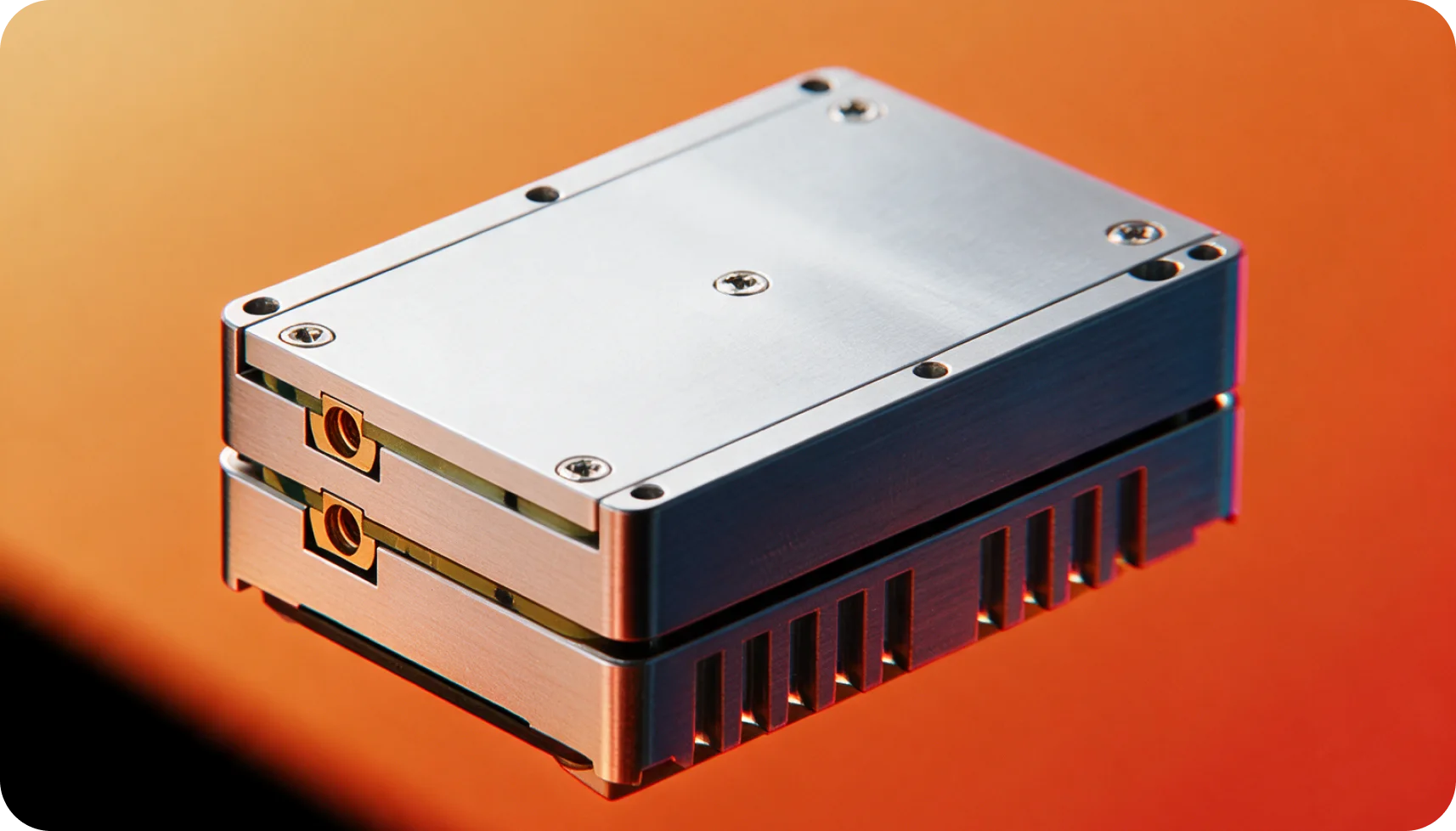
How Nano² fits interceptor airframes
Nano² is the Mesh Rider radio built for the tightest FPV and C-UAS interceptor airframes. It measures 46.9 x 35 x 20.7 mm and weighs 41 g, with up to 80 Mbps of throughput.
Nano² carries the same Sense EW and self-forming, self-healing mesh as the larger Mesh Rider radios, along with FIPS 140-3 and AES-256 encryption. One radio architecture spans Nano² through OEM, so a program can run the same network across interceptors and larger aircraft.
The wider Mesh Rider line already has independent results. XTEND’s STRIKER, running on our Mesh Rider® Mini, placed 3rd in Gauntlet II.
Questions to ask before choosing an interceptor radio
- Detection: How does the radio detect interference, and does it move on its own?
- Spectrum: Which bands can it use, and how much room does that leave to move?
- Mesh: Can drones relay for each other, and what happens when a node drops?
- Video chain: What is the glass-to-glass latency with your encoder and decoder?
- SWaP: What does the radio weigh and draw, and does it fit the airframe?
- Proof: What test data backs the anti-jam claims, and under what conditions?
On an interceptor, anti-jamming and mesh decide whether video and control hold at the end of the flight.
See Nano² and talk to Sales about your airframe.