
Drone communication at range: Holding a long-range link under EW
How fixed-wing teams plan a drone communication link that holds at range and under interference.
Most drone communication problems at short range come down to setup, such as antenna placement or the wrong channel. At range, they become link budget problems. The aircraft is far from the ground station, so the signal at each end is weak. Meanwhile, the RF environment between them keeps changing.
An earlier post in this series set out why Group 2 fixed wing is its own system category. This post goes a level down. It looks at what wears a link down at range, what the link should do as that happens, and where Boost fits.
- Setting the stage: For group 2 drones, several forces draw on the same link margin at once. The design job is to keep enough of it that they cannot take the link down together.
- Why it matters: Beyond line of sight, a dropped link is harder to recover, and in addition to mission success, expensive aircraft and payload are also at stake.
What hampers drone communication at range
On a long fixed-wing mission, these forces work on the link at the same time:
- Distance: Every added kilometer impacts signal strength. The margin between what the receiver hears and the noise floor shrinks, so the link has less room to absorb anything else.
- Terrain and geometry: Ridgelines and structures can block or reflect the path, and so can the aircraft’s own attitude. A link that is fine on one leg of an orbit can fade on the next.
- Interference and electronic warfare: Other emitters and crowded spectrum raise the noise the receiver works against, and deliberate interference adds to it. In contested environments that noise moves around.
The first post in this series covers why a longer link needs more than extra power. None of these forces can be removed. Instead, the job is to keep enough margin in reserve.
Link margin and how it gets spent
Link margin is the reserve between the signal the receiver needs and the signal it gets. It is the link’s budget for bad moments, such as a bank angle that turns the antenna away or a burst of interference.
Two points follow for a fixed-wing program:
- First, margin has to hold in both directions. The downlink carries video and telemetry to the ground, while the uplink carries command and control to the aircraft. A link that delivers good video while the aircraft can barely hear the ground station is one bad moment from lost control.
- Second, margin should be sized at the worst point in the mission. Datasheet range figures are typically measured under favorable conditions, with clear line of sight and low interference. The number that matters is the one that holds under the program’s own operating conditions. For a wider look at radio selection, see our guide to choosing a drone radio.
Interference and EW in contested RF
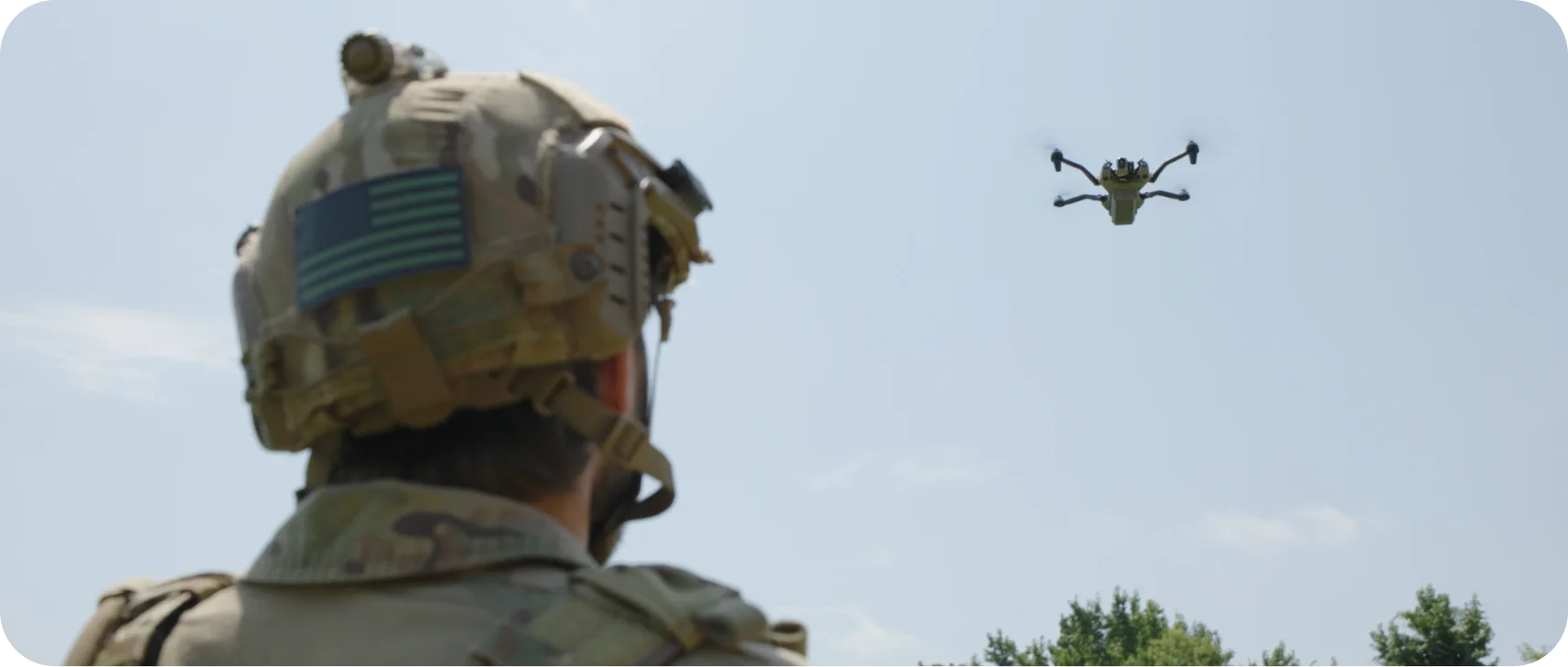
At short range, a strong signal can override a lot of interference. At long range, the desired signal is already weak, so the same interference takes a larger share of the margin. For that reason, contested RF hits long-range links hardest.
Holding the link here depends more on the ability to move than on raw power.
A few things help:
- Spectrum to move into: Multi-band radios let links operate across different bands. When one part of the spectrum degrades, there is somewhere else to go.
- A radio that detects and adapts: On Mesh Rider® radios, Sense EW detects interference and adapts as RF conditions change. It runs on the radio itself, with no separate system to add.
- A network that routes around trouble: Mesh and relay let traffic take another path through other nodes when one path degrades.
Any of these is only as good as its implementation. The useful test is whether it holds up in the interference the platform is likely to meet, and that belongs in a test plan.
Graceful degradation in practice
No link holds full data rate all the way out, so the useful question is what it does on the way down. A well-planned link degrades in a known order. Video gives up resolution first and telemetry slows, while command and control is protected to the end.
On Mesh Rider radios, video, telemetry and control share one link, and control gets priority automatically when bandwidth runs short. Adaptive link software can also step video resolution down to preserve both video and control.
For the integrator, that leads to some practical steps:
- Rank the traffic: Decide which streams the mission can lose, and in what order. Then confirm that the radio and autopilot agree.
- Plan the lost-link behavior: Highly autonomous platforms can ride through interruptions that operator-in-the-loop control cannot. Set the airframe’s lost-link behavior before the first long flight.
- Watch the trend: A link that loses margin slowly over a leg gives the operator warning before it drops.
Where Mesh Rider Boost fits
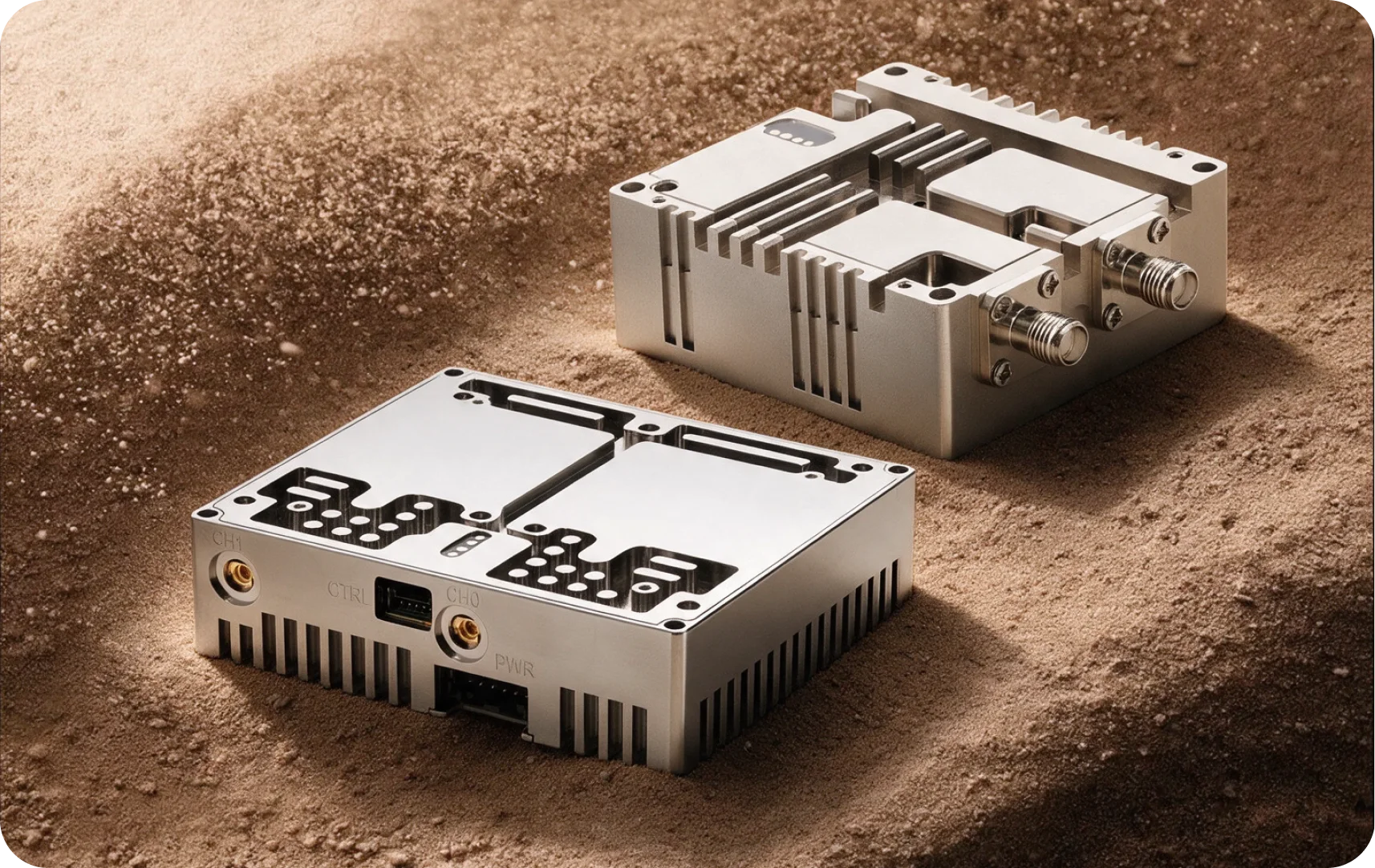
A thin margin on a path that still exists is a link budget problem, and Boost is built for that job. Boost amplifies the radio already on the aircraft. It adds transmit output and receive gain, improving the link budget in both directions.
Both directions matter for the reason above, since the uplink that carries control gets stronger along with the downlink. More margin also helps the link hold higher data rates farther out, which pushes back the point where degradation starts.
Boost integrates directly with Mesh Rider radios already in the field, so more range often does not require a new radio. It comes in C-band and S-band versions for long-range fixed-wing aircraft and other larger platforms.
Amplification has a limit, though. It only helps where a path exists. If a ridgeline or the curve of the Earth blocks it, the traffic has to go another way, through relay or mesh. Most long-range programs end up using both.
The bottom line: Plan the link around its worst leg. See how Boost fits your airframe, working with the Mesh Rider radio already on the aircraft.
See More