
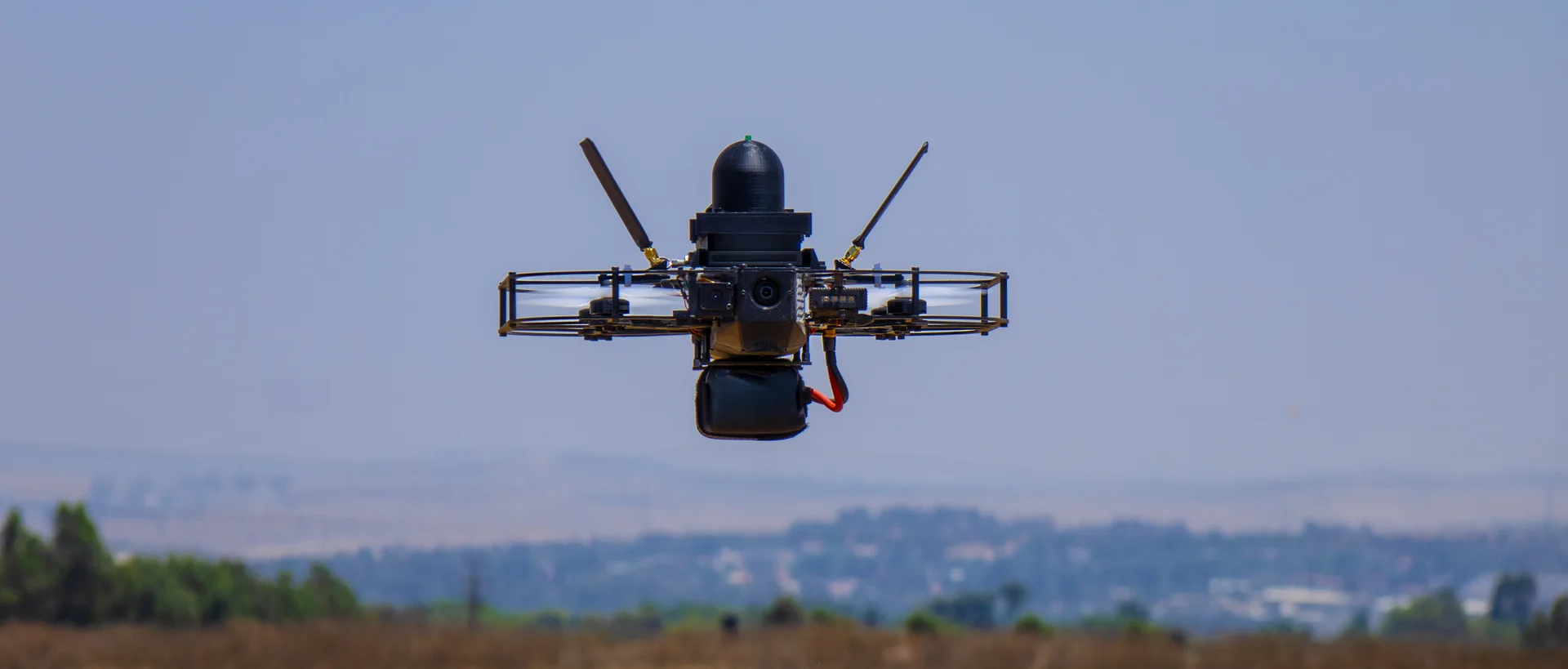

Beyond line of sight: What Group 2 UAS need from their communications systems

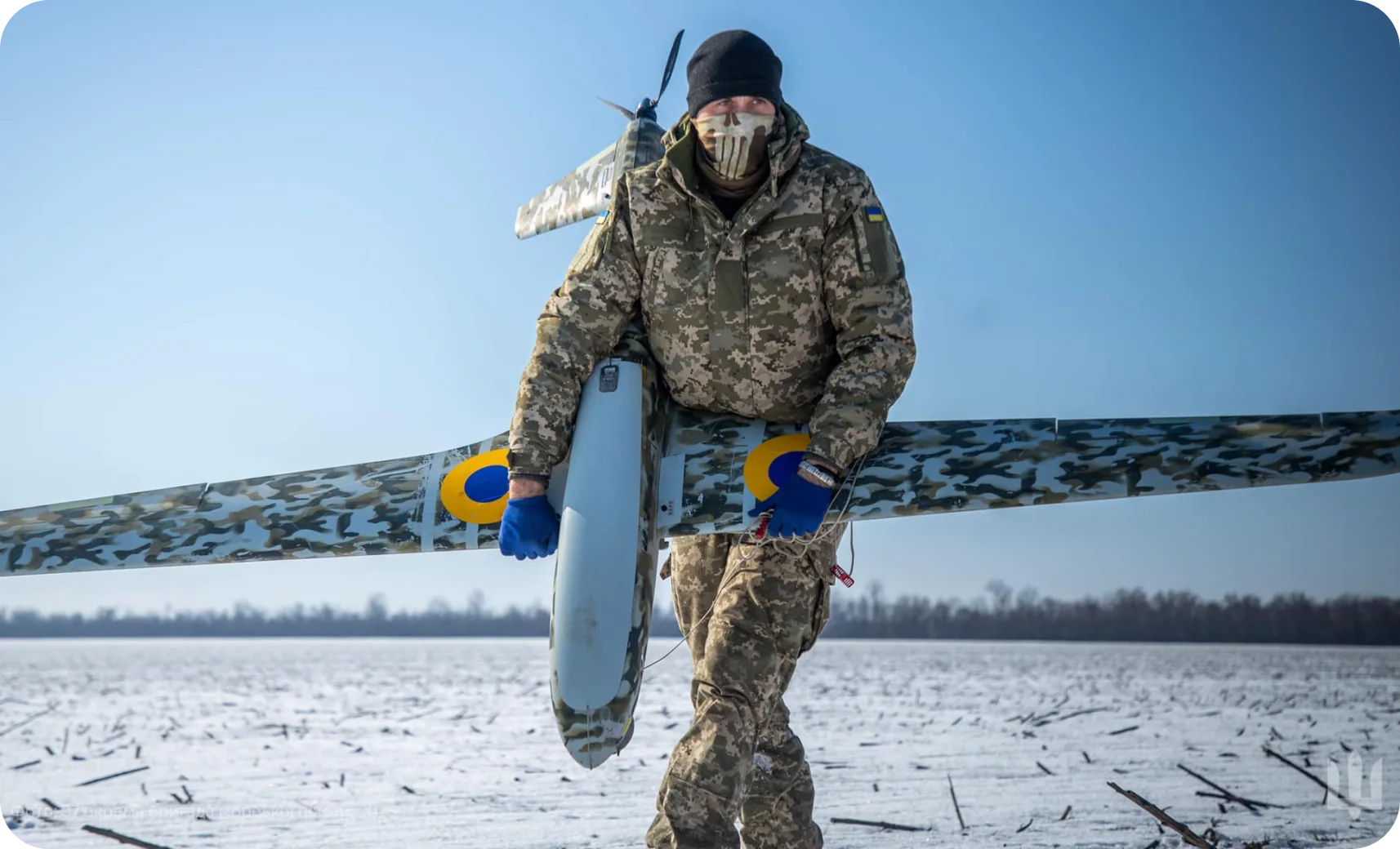
A Group 2 fixed-wing aircraft is usually bought to do what a small quadcopter cannot: fly farther, stay up longer and carry a heavier payload.
These are core mission objectives for the platform, but they're also where the communications problem starts.
- Longer distances make maintaining reliable connections more challenging.
- Group 2 aircraft must still carry command and control, telemetry, video and sensor data while operating through interference and changing RF conditions.
This class of aircraft also typically operates beyond line of sight (BLOS), which presents different requirements than those of a Group 1 quadcopter or FPV drone. Range, endurance and throughput requirements all change what the radio must deliver.
This blog examines those requirements and the communications architecture needed to support them.
What beyond line-of-sight communication means for Group 2 UAS
The U.S. Department of Defense classifies unmanned aircraft into five groups based on maximum gross takeoff weight, normal operating altitude and airspeed. Group 2 sits above the smallest UAS platforms.
For communications, the classification matters less than how the aircraft is used. Three factors change as platforms grow in size and capability:
- Endurance changes the exposure to interference. A short sortie may give an adversary limited time to identify and disrupt a communications link. A multi-hour ISR mission provides considerably more opportunity. The longer the aircraft remains airborne, the more important it becomes for the radio to adapt to interference and changing RF conditions.
- Distance changes how the link degrades. As the aircraft moves farther from its ground station, the received signal weakens. Terrain, Earth curvature and other obstructions can eventually eliminate the direct RF path. The communications system must account for these conditions and support alternate paths when needed.
- The power budget changes what's possible. Group 1 quadcopters operate under tight size, weight and power (SWaP) constraints. Group 2 airframes generally have more room for communications equipment, although every additional gram and watt still affects payload capacity and endurance.
For a Group 2 program, supporting BLOS operations means maintaining command and control, telemetry, video and sensor data beyond the limits of a conventional direct link. That requires planning for both RF performance and the architecture used to extend connectivity.
Why radio line-of-sight sets the first limit
At the frequencies commonly used for UAS communications, radio signals generally propagate along a direct path. Several factors influence how far that path remains usable:
- Earth curvature and terrain: Earth curvature sets the radio horizon, while terrain, buildings and other obstacles can limit usable range.
- Antenna height: Increasing altitude at either end can extend the radio horizon and improve the available path.
- Fresnel zone clearance: Terrain, vegetation or structures entering the first Fresnel zone can introduce additional signal loss, even when the aircraft and ground station remain visible to each other.
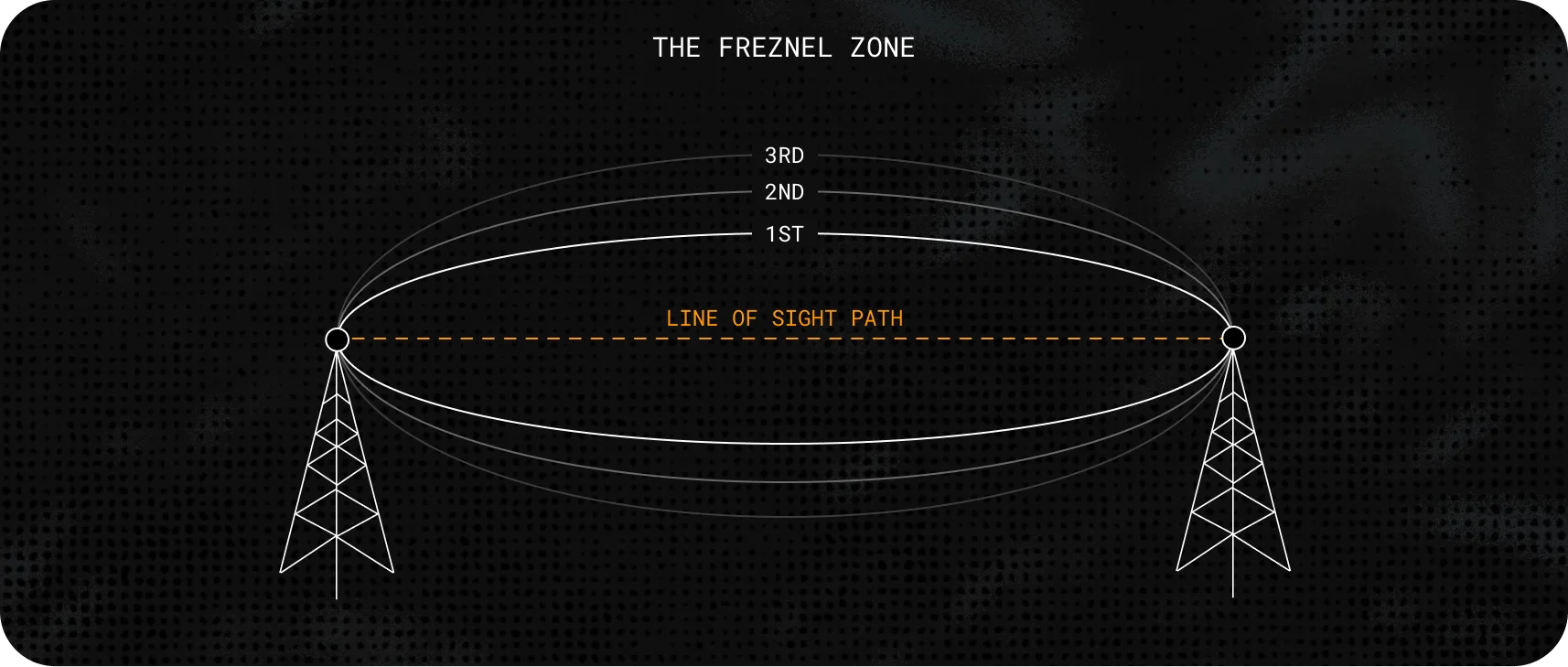
Inside the usable path, the link budget becomes the next constraint.
As distance increases, free-space path loss grows and the received signal weakens. Receiver noise and external interference further influence how much usable signal remains.
The difference between received signal strength and the level required to maintain the link is the available link margin. That margin determines how much additional loss or interference the connection can tolerate before performance deteriorates.
Doodle Labs' long-range communications guidance explains how frequency selection, antenna configuration, terrain, interference and platform SWaP influence how far a connection can reach and how reliably it performs.
For Group 2 programs, RF planning must address two separate problems:
- Propagation: Does a viable RF path exist?
- Link margin: Is there enough margin to maintain communications along that path?
Each requires a different engineering approach.
Extending connectivity beyond the direct link
Increasing transmit power can improve a link with insufficient margin. It cannot restore a direct path blocked by Earth curvature or terrain.
When the direct path is unavailable, the communications architecture needs another way to reach the aircraft.
- Relay. An intermediate platform, such as another aircraft, ground vehicle or elevated radio node, can provide an alternate communications path. The relay must have suitable connectivity to both ends, allowing traffic to reach an aircraft outside the original ground station's coverage.
- Mesh networking. A self-forming, self-healing mesh allows multiple radios to participate in the network. When an available link is disrupted, traffic can be routed through another connected node. For fixed-wing aircraft performing ISR or relay missions, this capability also allows the aircraft to extend communications to other platforms across air, ground and sea.
- SATCOM. Satellite communications can provide connectivity when terrestrial or airborne RF paths are unavailable. Some Group 2 programs use SATCOM alongside tactical radios, assigning traffic to each connection based on mission requirements, available bandwidth and operating conditions.
Each approach adds cost, integration considerations and SWaP requirements. The appropriate architecture depends on the distance involved, the available relay infrastructure, the mission's data requirements and the consequences of losing connectivity.
What to look for in a Group 2 UAS communications system
Peak throughput is one of the easiest radio specifications to compare, but it rarely tells the full story. An aircraft operating at distance, carrying multiple data streams or encountering interference may experience considerably different performance than a radio tested under favorable RF conditions.
For Group 2 fixed-wing programs, engineers should evaluate how a radio performs at mission range, under load and as RF conditions change.
Three capabilities deserve particular attention:
- Range and throughput within the SWaP budget. Look for a radio that maintains the required data rates at operational distance without consuming excessive payload capacity or flight time. Low-SWaP hardware leaves more room for sensors, power reserves and other mission equipment.
- Resilience in changing RF conditions. Evaluate how the radio responds to interference and whether it can adapt without operator intervention. Multi-band flexibility, encryption, low-latency communications and electronic warfare resilience features all matter in contested environments. Intelligent transmit power management can also reduce unnecessary RF emissions, providing potential low probability of intercept (LPI) and low probability of detection (LPD) benefits.
- Graceful degradation. Understand what happens when available bandwidth decreases. Video quality or data rates may need to adjust, but command and control must retain sufficient capacity for safe operation. Look for traffic prioritization capabilities that protect critical data flows as the link degrades.
Testing these capabilities at representative distances and under realistic traffic loads provides a more useful picture than peak throughput alone.
A radio that performs well at short range may still struggle to maintain critical data flows near the limits of its link budget.
How Doodle Labs addresses Group 2 communications challenges
Group 2 fixed-wing platforms need long-range, high-throughput communications that maintain connectivity through interference without taking too much away from payload capacity or flight endurance.
Doodle Labs addresses these requirements through Mesh Rider OEM, Boost and mesh networking. Together, they provide:
- Low-SWaP integration with built-in Wi-Fi, GPS and flexible radio interfaces.
- Additional link margin through intelligent power management, helping maintain connectivity at range while limiting unnecessary RF emissions.
- Resilient, networked communications through Sense EW, mesh and relay capabilities that adapt to changing RF conditions and extend connectivity across platforms.
Mesh Rider OEM: Low SWaP with integrated capabilities
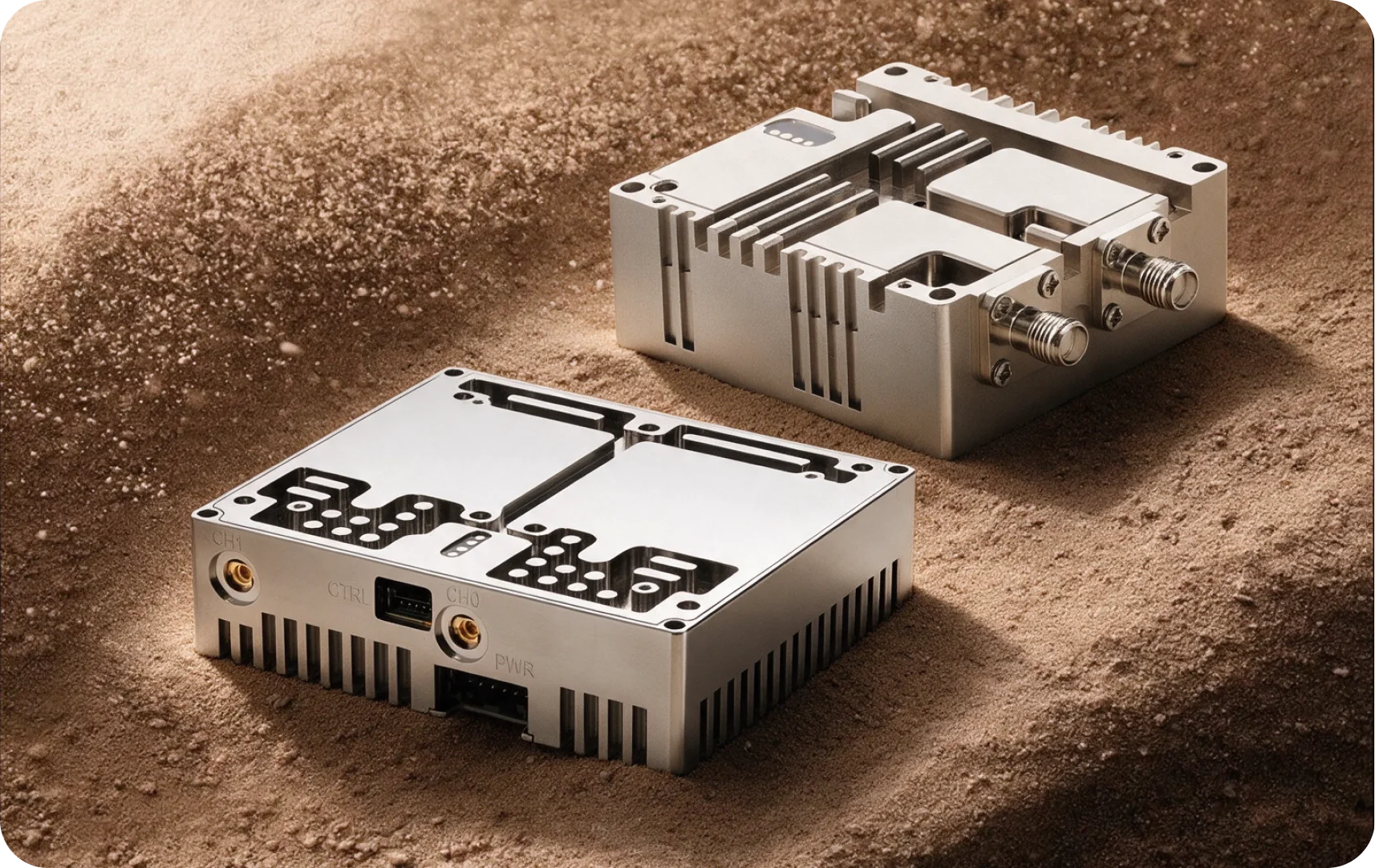
The Mesh Rider OEM radio provides a low-SWaP integration option with frequency and interface flexibility.
- Integrated Wi-Fi and GPS reduce the need for separate components, helping simplify integration while preserving space, weight and power for mission payloads and flight endurance.
- Mesh networking allows the aircraft to participate in a self-forming, self-healing network.
- Sense EW enables the radio to adapt to interference and changing RF conditions.
The Mesh Rider family also has an established fixed-wing application. AEVEX Aerospace integrated the Mesh Rider Mini into its Dominator Group 2 UAS, a platform designed for surveillance, payload delivery and mesh networking.
Boost: Intelligent power management and RF protection
For programs requiring additional RF link margin, Doodle Labs' Boost bidirectional amplifier (BDA) intelligently integrates with Mesh Rider radios to extend range and help preserve higher data rates at distance.
Boost supports two power levels based on link requirements:
- Up to 4 W when needed: Additional RF output power helps maintain connectivity and link margin as conditions deteriorate.
- 1.6 W when conditions permit: Lower-power operation reduces unnecessary RF emissions, providing potential LPI and LPD benefits through a smaller RF signature.
For Group 2 aircraft operating in contested environments, that distinction matters. Higher output power can help sustain connectivity when link conditions deteriorate, while lower-power operation can reduce the RF signal available for adversaries to detect or intercept.
Combined with Mesh Rider's Sense EW capabilities, Boost provides another means of protecting the communications link while managing the aircraft's RF signature.
Mesh and relay: Extending connectivity across platforms
Mesh Rider's self-forming, self-healing mesh networking allows Group 2 aircraft to extend communications beyond a single direct RF link.
By connecting through other aircraft, ground vehicles or elevated nodes, the network can maintain communications across greater distances and route traffic through alternate paths when conditions change.
Combined with OEM's low-SWaP integration and Boost's intelligent power management, mesh and relay capabilities give Group 2 platforms additional flexibility to maintain communications throughout the mission.
Planning your Group 2 BLOS communications architecture
Before selecting a communications system, program teams should evaluate several factors against the aircraft's actual mission requirements:
- Range and performance: Does the link maintain sufficient throughput and margin at the required operating distance?
- RF resilience: How does the radio respond to interference, changing RF conditions and reduced bandwidth?
- Network architecture: Can mesh, relay or other connectivity options maintain communications beyond the direct RF path?
- SWaP and integration: Does the communications system fit within the aircraft's payload, power and endurance requirements?
- RF signature: Can transmit power adapt to link conditions to reduce unnecessary emissions?
These considerations provide a starting point for evaluating radio performance and developing a communications architecture suited to the mission.
Group 2 fixed-wing aircraft are expected to cover greater distances, remain on station longer and carry increasingly capable payloads. Their communications systems need to support the requirements without becoming a limitation on the platform.
Talk to Doodle Labs Sales Engineering. Share your airframe, payload and mission requirements, and our team can help evaluate where Mesh Rider OEM, Mini, Boost and mesh networking fit into your communications architecture.
Request a consultation