


A look at how Doodle Labs’ stacked Front End Subsystem design fits complete dual-stream MIMO performance into one of the smallest embedded radio footprints available.
Small, unmanned aircraft have a size problem that radios cannot ignore. Every gram and every cubic millimeter on a compact airframe competes directly with flight time, payload, and structural margin. For years, this constraint forced a hard choice on radio selection. Designers could pick a single-stream SISO radio that fits the airframe, or a full dual-stream MIMO radio that delivers the throughput modern missions need. Rarely could they get both at once.
Doodle Labs designed the Mesh Rider® Nano² to close that gap. It fits full 2×2 MIMO performance into one of the smallest embedded Mesh Rider radio footprints available. Engineers do not have to give up SWaP budget they have already committed elsewhere on the platform. This post looks at the tradeoff Nano² addresses, the architecture behind it, and why it matters for OEMs scaling production under initiatives like the Drone Dominance Program.
SWaP Tradeoff in Compact UAS Radios
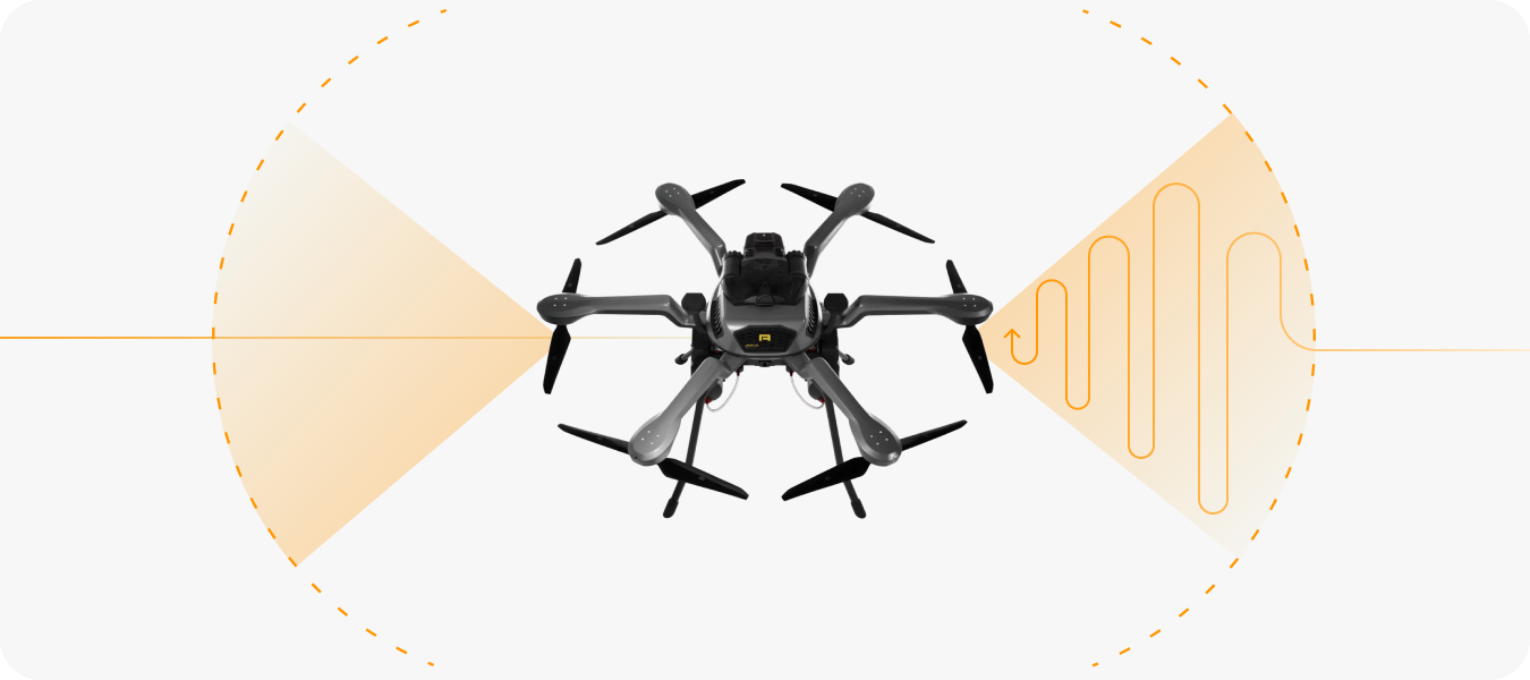
Digital FPV platforms, Group 1-3 UAS, and other SWaP-constrained airframes typically have fixed, small mounting dimensions. Most full dual-stream MIMO radios simply do not fit inside them. At the same time, these platforms often need simultaneous FPV video and command-and-control links. Single-stream SISO radios cannot handle that job at the throughput and reliability modern missions require.
As a result, platform designers have historically had to satisfy one requirement at the expense of the other. They shrink the radio and accept single-stream performance, or they accept a larger footprint to get MIMO. That tradeoff is not a matter of degree; it is closer to a binary decision. It also surfaces early in airframe design, well before a program reaches flight test.

Inside the Stacked Front-End Subsystem
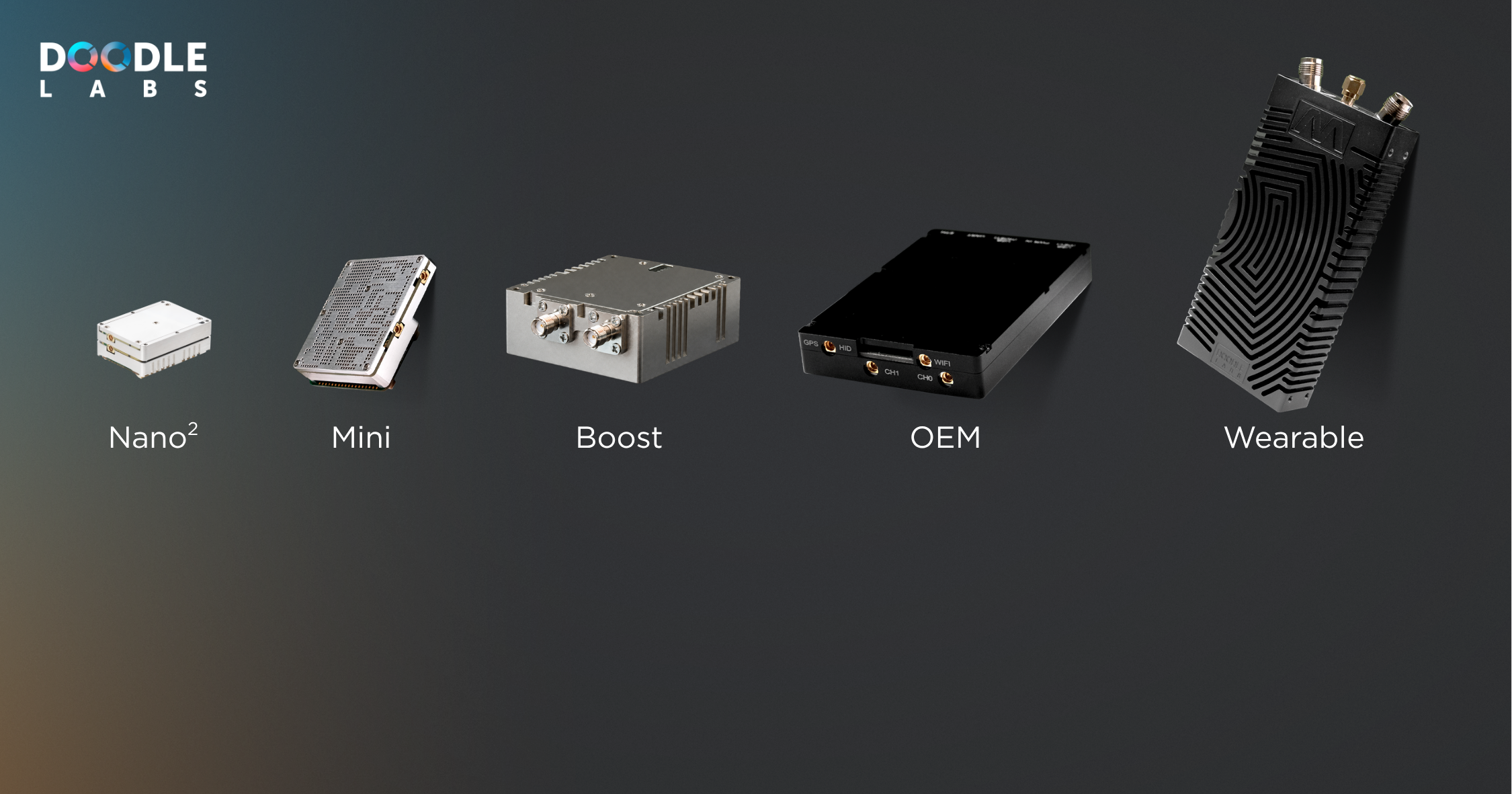
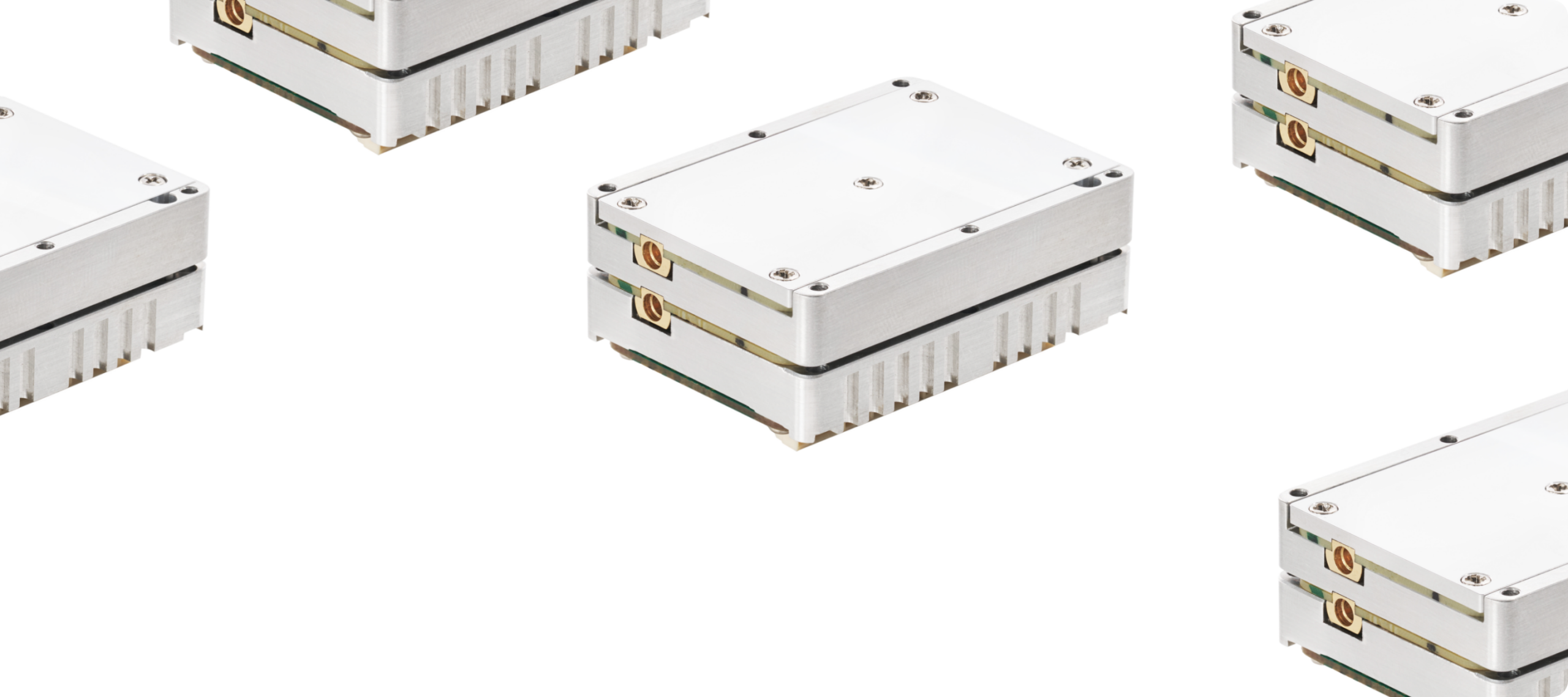
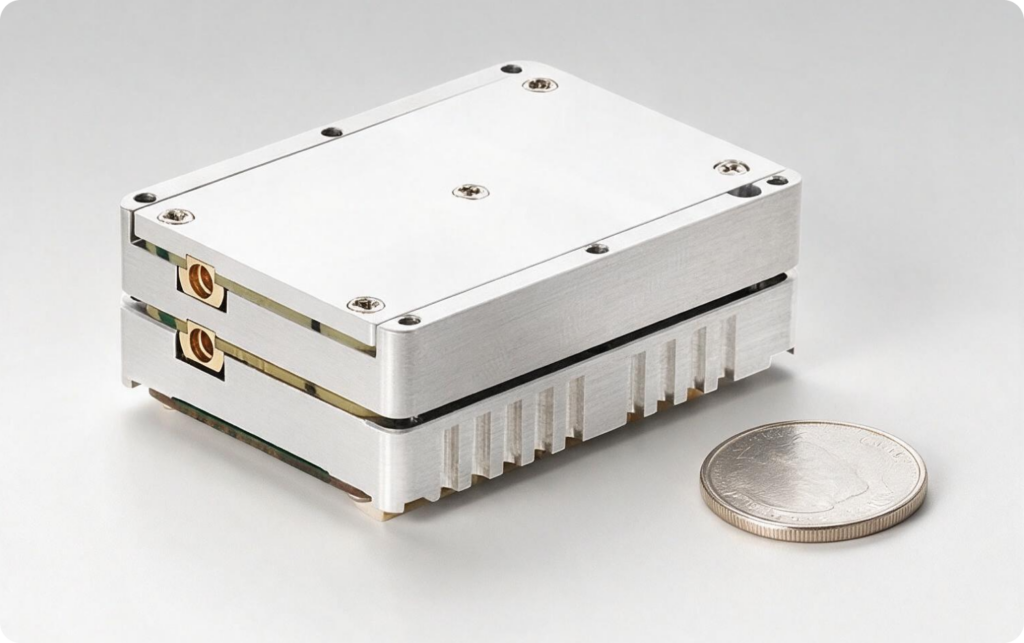
Nano² resolves the tradeoff through its Front-End Subsystem, or FES. This proprietary module stacks frequency shift, filtering, and power amplification for a single MIMO stream into one compact unit. Two independent, per-stream front ends share a mounting envelope with Doodle Labs’ smallest single-stream modules. As a result, Nano² occupies nearly the same footprint as a single-stream Nano radio. Length and width match exactly; only the height increases, to fit the second stacked unit.
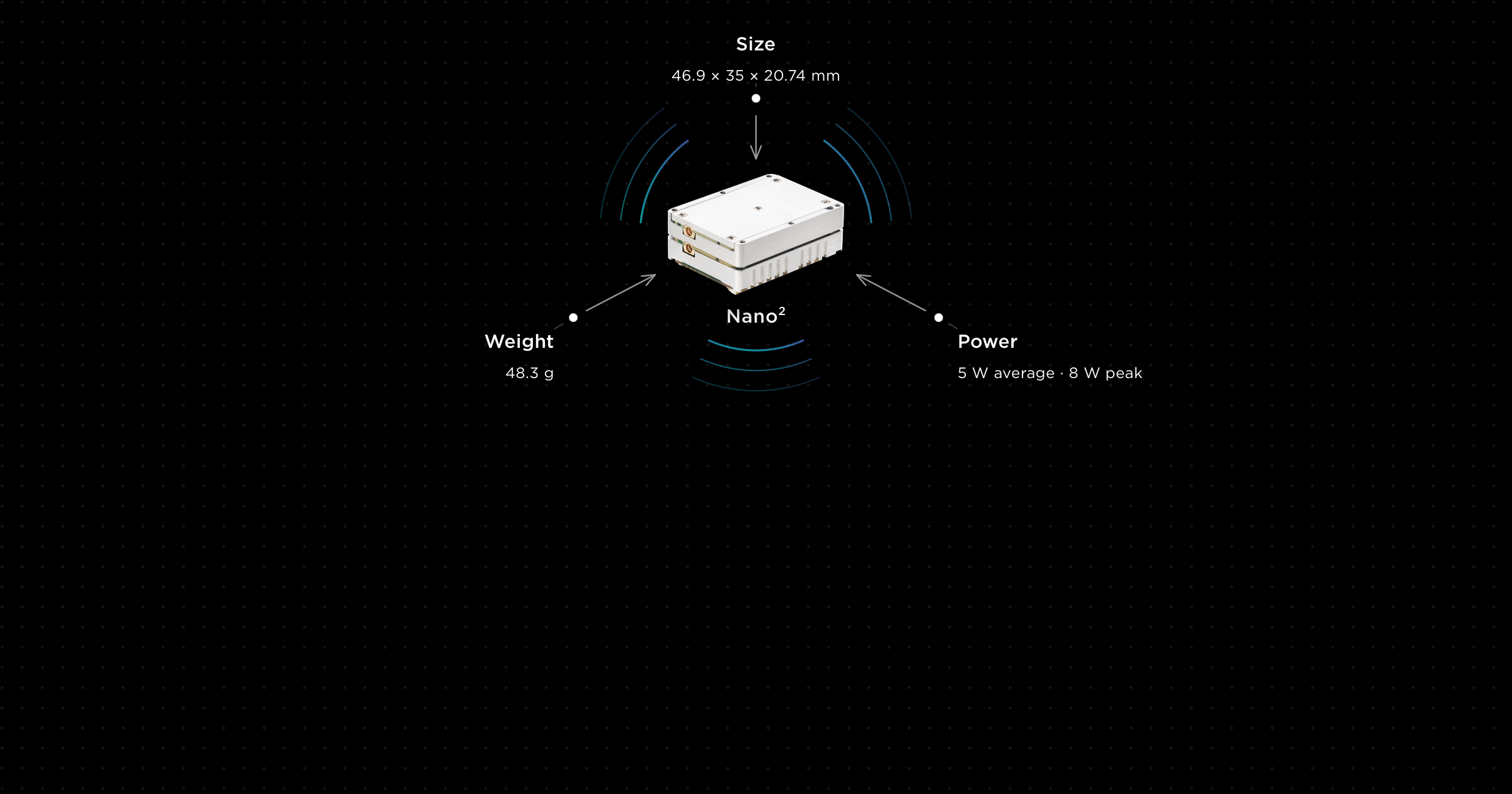
Because the two streams stay physically and electrically independent, neither one compromises the other. That distinction matters. A radio that claims full MIMO throughput on paper but quietly degrades one stream to fit a smaller enclosure has not actually solved the SWaP problem; it has just relocated it. Nano² instead delivers complete 2×2 MIMO RF performance in a single package. It reaches up to 80 Mbps of single-radio throughput and a field-proven operating range of 330 km. The whole module measures 46.9 x 35 x 20.74 mm and weighs 48.3 grams.
Link Assurance and Boost Compatibility at Nano² Scale
Nano² runs the same Mesh Rider® OS Link Assurance stack found on Doodle Labs’ larger radios. Sense cross-band frequency agility, self-forming and self-healing mesh networking, and AES-256/AES-128 encryption all operate the same way they do on Mini or OEM. The encryption stack is validated to FIPS 140-3 standards and none of that capability is traded away for size.
Nano² also connects directly to the Mesh Rider Boost amplifier through a custom cable harness, and therefore does not require any additional RF adaptation. For programs that need more range or a stronger signal-to-jamming ratio later in a platform’s service life, that gives integrators a path to add power without re-qualifying a different radio. The currently shipping Nano² variant covers the M1–M6 bands (1,625–2,500 MHz), L+S band and 900 MHz + 2.4 GHz.
Nano² in the Drone Dominance Program
Nano²’s target integrators include digital FPV drone OEMs, SOF and conventional small-UAS programs, and OEMs building specifically toward the U.S. Drone Dominance Program. Drone Dominance is a roughly $1 billion, multi-phase Department of War effort to scale U.S. production of small, low-cost drones. The Test Resource Management Center and the Defense Innovation Unit, under the Office of the Secretary of War (war.gov; drone-dominance.io) jointly administer the program. Each phase runs through a “Gauntlet” competition. Gauntlet I ordered 30,000 drones from 12 vendors, and Gauntlet II was underway as of August 2026.
Programs at that scale need a radio that fits small, expendable airframes without giving up MIMO performance. They also need a partner that can be deliver the radios in volume on a compressed timeline. Doodle Labs has already supported Phase I fulfillment for Drone Dominance OEMs ahead of Gauntlet II. That fulfillment draws on manufacturing capacity built for 200,000 radios a year, designed to be non-ITAR. Nano² carries that production model down to a smaller, denser form factor. A fleet standardized on Mesh Rider doesn’t need a separate qualification cycle for its smallest airframes.
Nano² Specifications
| Spec | Nano² |
| Dimensions | 46.9 x 35 x 20.74 mm |
| Weight | 48.3 g |
| MIMO | 2×2, full dual stream |
| Throughput | 80 Mbps (single radio) |
| Range | 330 km, field-proven |
| Bands (shipping) | M1–M6 (1,625–2,500 MHz) |
| Bands (in development) | L+S; 900 MHz + 2.4 GHz; 2.4 GHz |
| Security | AES-256/AES-128; FIPS 140-3-validated, certificate pending |
| Amplification | Direct Boost compatibility via cable harness |
Band-specific model numbers, volume pricing, and Drone Dominance Program terms are not published. Qualified OEMs should contact Doodle Labs directly rather than assume a standard price list, since production slot availability for upcoming Gauntlet phases can shift quickly. For engineering teams evaluating Nano² against a specific airframe or delivery timeline, the Nano² product page has full specifications and a datasheet. The Doodle Labs team can also walk through Gauntlet-scale delivery options directly. Contact Doodle Labs to start that conversation.