


Communications supply chain is a decisive factor in how drone OEMs scale
Demand for military drones has risen sharply, favoring suppliers that can deliver high-quality, flexible drone systems at volume. The Pentagon’s American Drone Dominance program is a roughly billion-dollar effort built around iterative production gauntlets for low-cost, one-way drones. Early phases emphasize rapid delivery, scalable manufacturing, and the ability to lower unit costs over time.
For drone OEMs, this demand is an opportunity for rapid growth. It’s also a test of whether their supply chains can keep pace. The OEMs that win these awards are not always the ones with the most cleanly-designed airframe. System design and performance matter, but so does having a supply chain that can scale with demand.
The communications layer is one of the most critical components for a drone system, and it’s also a common place where a drone supply chain can have risk.
In this blog, we look at what drives risk, and what engineers and system-builders positioning themselves for these programs should look for in a radio partner.
Why the Prototype-to-Production Gap Catches Programs Off Guard
Most of the supply chain risks stay invisible during design and development.
- An OEM qualifies a datalink, completes the integration, and moves on to the next phase. The radio passes its tests, so the comms subsystem appears settled. Key gaps appear later, when the system advances to consideration for a production-scale contract or a large commercial order, and the procurement team begins to pull on the supply chain. Lead times that were fine for engineering samples don’t necessarily work for production runs.
- Export paperwork that was manageable for one shipment-level becomes a recurring burden when shipment quantities scale.
- A component that was readily available at one production level becomes a constraint with scale because it doesn’t exist in the configuration or available in the one form factor that the production platform now needs.
None of these reflect a problem with the drone system design or capabilities of specific components, but they become material issues for suppliers that haven’t designed their operations for scale in the first place.
How comms and datalinks drive scale readiness
The comms component tends to surface once other lead times have been compressed, and the datalink is the only remaining variable. By then, requalifying an alternative radio is seldom realistic on any real-world program timeline.
Evaluating the communications supply chain alongside RF performance early is the more reliable path; however, it is often skipped when engineering performance dominates the prototype stage.
Together, these pressures explain why production volumes at scale depend on sourcing. An OEM that can secure trusted parts, in quantity, on a fast timeline is well-positioned to deliver on its quotas.
Compliance and Trusted Sourcing
Compliance has shifted from a documentation step to a condition of sale. The Drone Dominance gauntlets weigh supply-chain security and ease of use alongside raw performance, reflecting a broader standard that untrusted components represent an unacceptable risk.
Export posture belongs in the same conversation, because it is a supply chain variable as much as a legal one. Components controlled under ITAR require an export license for shipments to foreign customers, including allied partners. Managing that across a production program adds cost and schedule risk, especially when multiple destinations and purchase-order cycles are involved.
At Doodle Labs, we design our Mesh Rider® radios to address challenges like these, as our non-ITAR status enables shipments to allied and commercial customers to move through standard commercial channels, without a separate export-license step on each order.
Paired with NDAA and Blue UAS alignment on the domestic side, the same hardware clears both international and domestic compliance reviews. As a Qualcomm partner, Doodle Labs is also able to deliver access to a trusted wireless ecosystem, further enhancing our ability to deliver data links that are reliable, transferable and clear procurement hurdles.
One Mesh Stack Across Form Factors
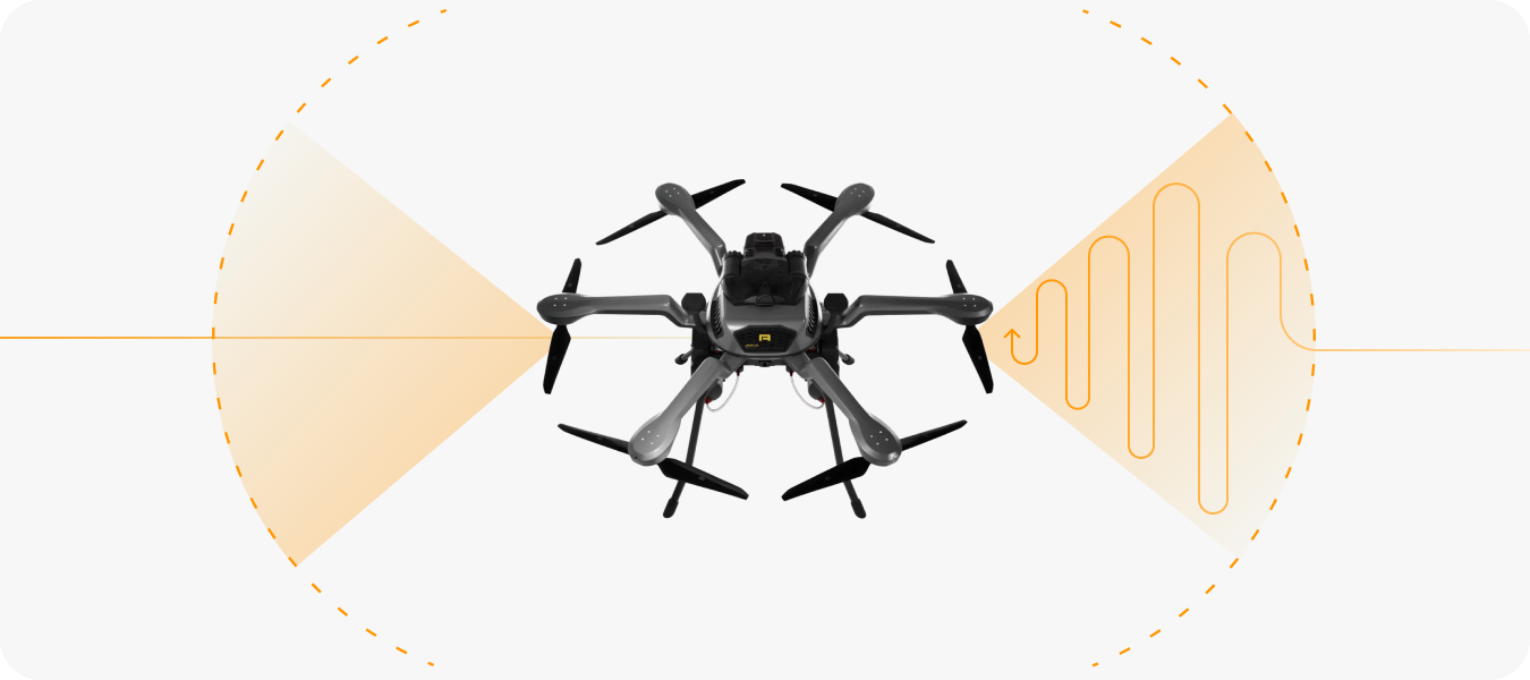
Mesh and swarm capability has become a key demand for modern battlefield scenarios, and programs requirements also change shape as they scale, which is where a single mesh architecture pays off.
A platform that starts as a mid-size fixed-wing may later need a smaller radio for a reduced-SWaP FPV drone variant, a different enclosure for a ground-vehicle integration, or a module-level part for a new OEM customer building around the same network.
If every form-factor change demands a fresh datalink qualification, the engineering cost compounds and the shared mesh that made the first integration valuable begins to erode.
Doodle Labs achieves this with patented multi-band technology that combines several bands in a single radio. The federal configurations cover M1–M6 and L+S bands, and the commercial models combine 900 MHz and 2.4 GHz for global deployment.
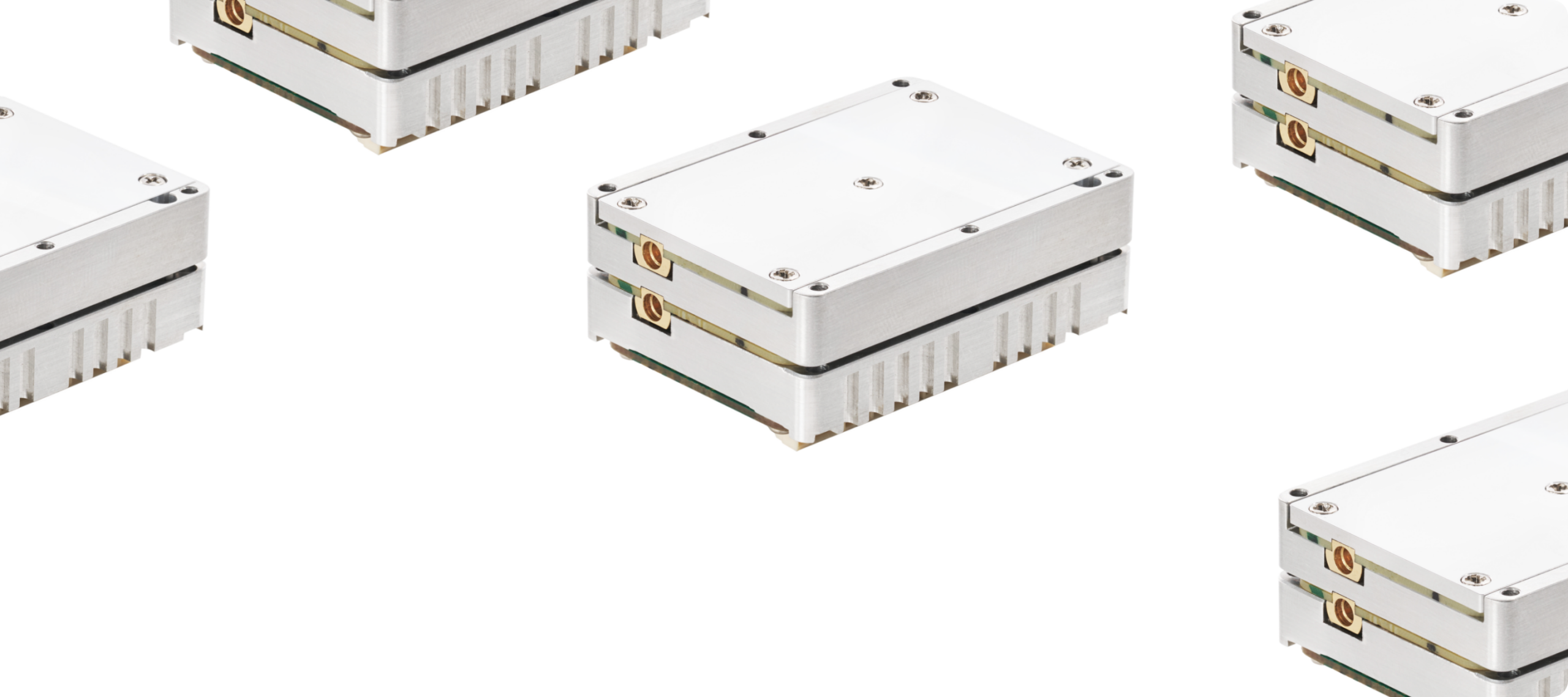
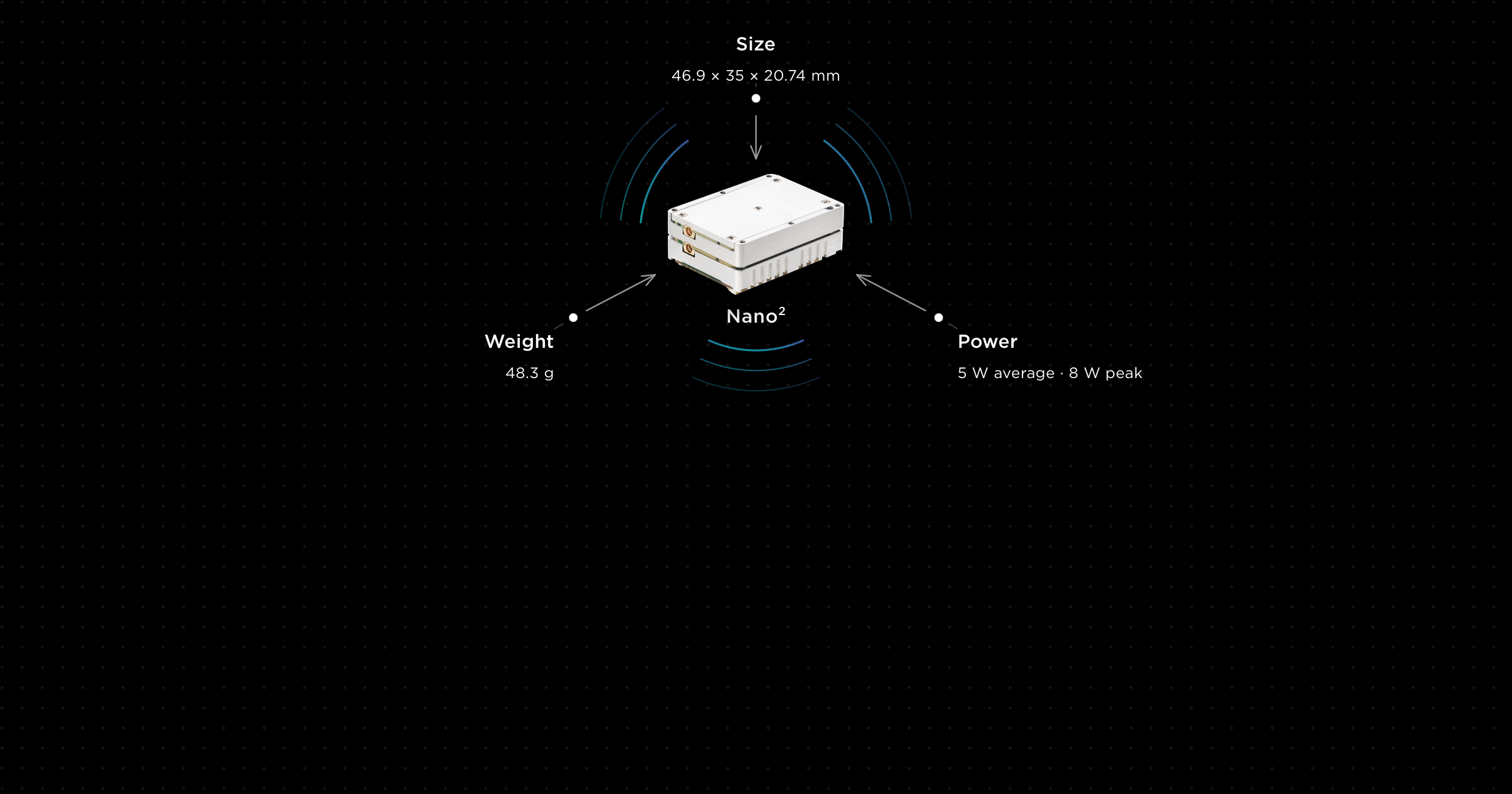
The Mesh Rider® line spans several form factors including the Nano², the Mini, the OEM, and Wearable variants on the same underlying technology stack, meaning that a program that qualifies Mesh Rider® once can move across that range without requalifying its communications architecture.
Network behavior, configuration tooling, and integration patterns carry over from one variant to the next, and for teams managing a family of drone or unmanned platforms, that consistency has practical value:
- Engineering effort spent on integration is not repeated for every new configuration.
- Procurement works from a single supplier relationship across the platform family.
- And field support works with one known mesh architecture, regardless of which Mesh Rider® variant a given platform carries.
Production Capacity and Lead Times
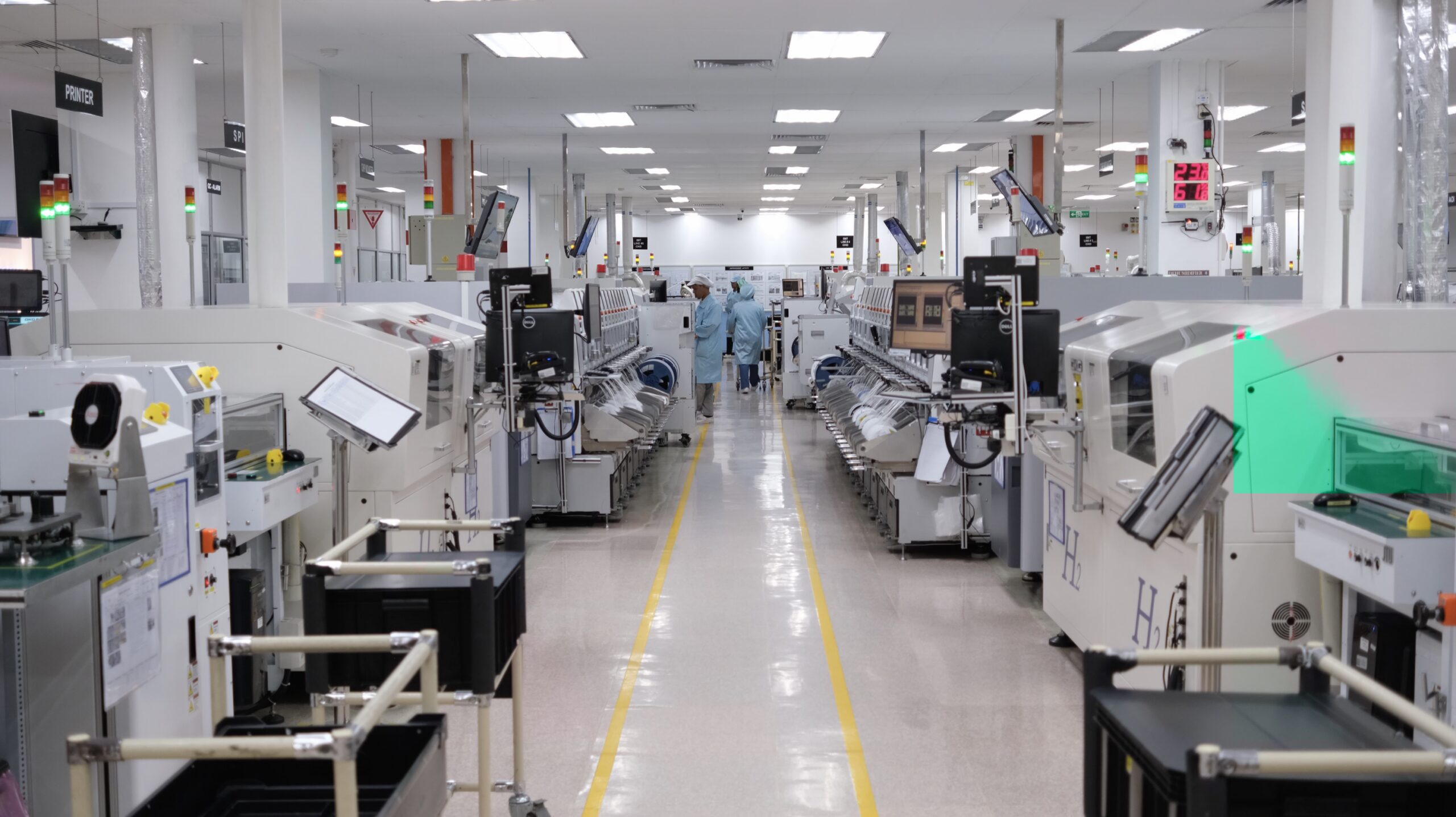
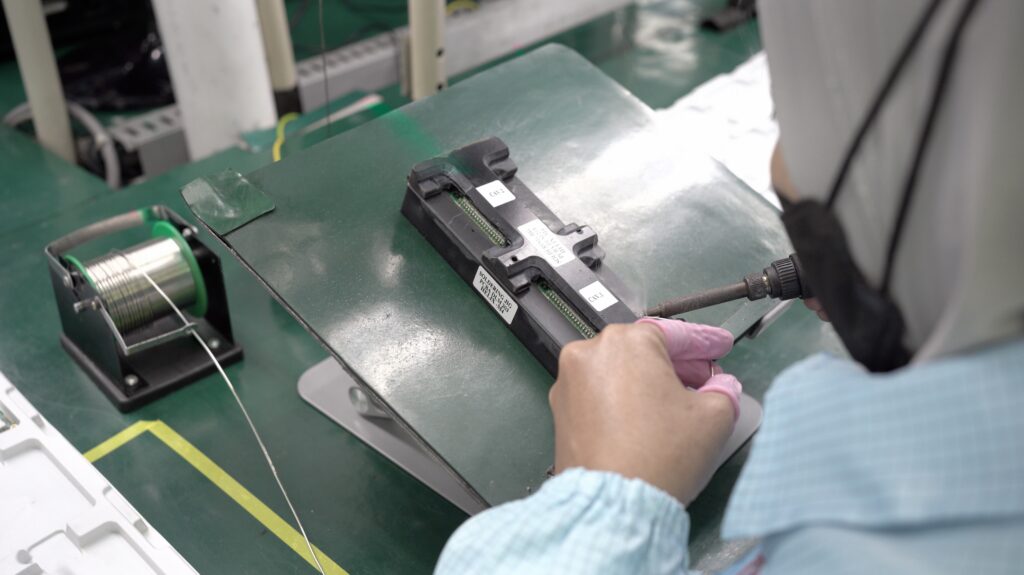
Capacity is another critical question that drone OEMs that are scaling must question because it maps directly to program risk. Doodle Labs operates at a production capacity of about 200,000 units per year.
For an OEM, that scale means a volume order is less likely to create a supply constraint that backs up into the program schedule. Moving from pilot production to a larger contract does not require negotiating lead-time exceptions or managing partial deliveries across several windows.
Lead times matter just as much as capacity. Standard lead times for Mesh Rider® hardware run about two to four weeks, compared with the eight-to-sixteen-week windows common for more constrained or export-controlled components. A two-to-four-week lead time can be built into a production schedule without the buffer stock that inflates program cost, and it gives procurement teams a realistic basis for planning. These figures reflect a supply chain designed with volume production as a requirement rather than an afterthought.
Design for OEM-Integration
Doodle Labs’ designs its product line for straightforward integration. Our mini-OEM, Nano², and OEM Mesh Rider® radios deliver up to 80 Mbps throughput and transmit full-HD videos beyond 50 km. They use a dual-chain MIMO chipset with self-healing mesh.
The mini-OEM represents a 55% reduction in footprint over the previous generations of radios, and its socketed versions remove the connectors for faster board integration. Doodle Labs offers both off-the-shelf radios and custom builds and supports integration directly to help OEMs spend less time on the datalink and reach production sooner.
Field-Proven Capability
Drone OEMs and systems designers already know that there’s often a huge difference between how systems perform in controlled test environments vs real-world battlefield conditions. Manufacturers that are seeking to scale must consider how their communication and other component providers can deliver in the field.
At Doodle Labs, our technology has had significant use in active programs. Teal Drones, part of Red Cat Holdings, has partnered with Doodle Labs to develop technology for the U.S. Army’s Short Range Reconnaissance program. BlackSea Technologies’ Global Autonomous Reconnaissance Craft uses Doodle Labs radios for extended-range mesh networking. The SkyRanger R70 multi-mission UAS runs a 900 MHz Mesh Rider® radio and Freefly’s Astro also flies on Doodle Labs.
Our radios deliver trusted data links for a range of drone and unmanned systems manufacturers, delivering confidence on the ability to perform in battlefield environments.
Choosing a Communications Partners is a Critical Call
Drone OEMs are increasingly aware that as demand grows, the ability to produce trusted, repeatable volume matters as much as the design itself. With the essential role of communications and networking in today’s unmanned missions, the supply chain behind the communications layer has become a critical part of decision-making.
For most drone OEMs, the practical question becomes – can a comms partner match their production ramp, meet their compliance needs, and support their target markets? A radio line that is multi-band, NDAA-compliant, and produced at scale addresses all three in one.
Doodle Labs has spent over two decades in industrial wireless manufacturing and built partnerships to deliver radios at production scale to customers worldwide.
To discuss scaling a specific platform, contact the Doodle Labs team. https://doodlelabs.com/contact/
You can also explore the Mesh Rider® radio line to see how it fits a given roadmap.