

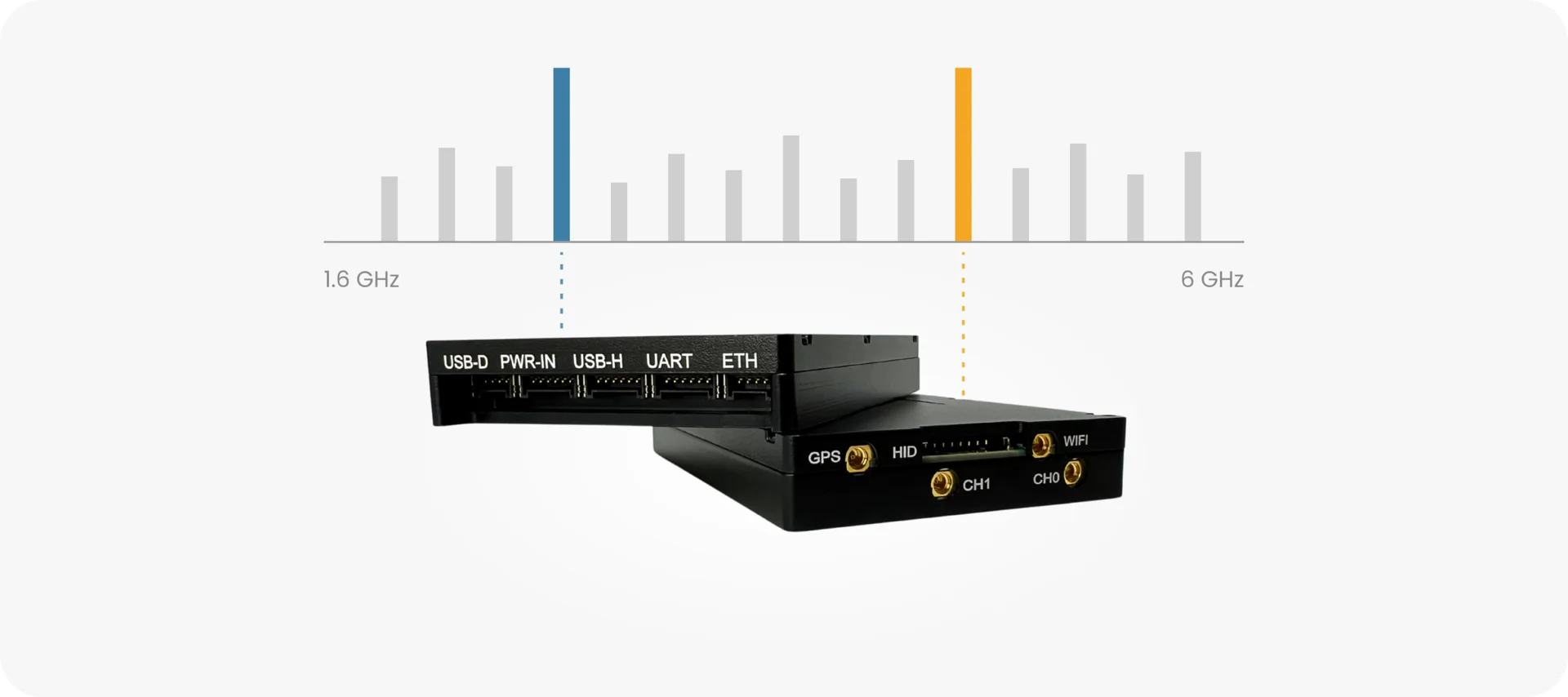

How Drone OEMs Are Designing Systems for Rapidly Evolving Program Needs
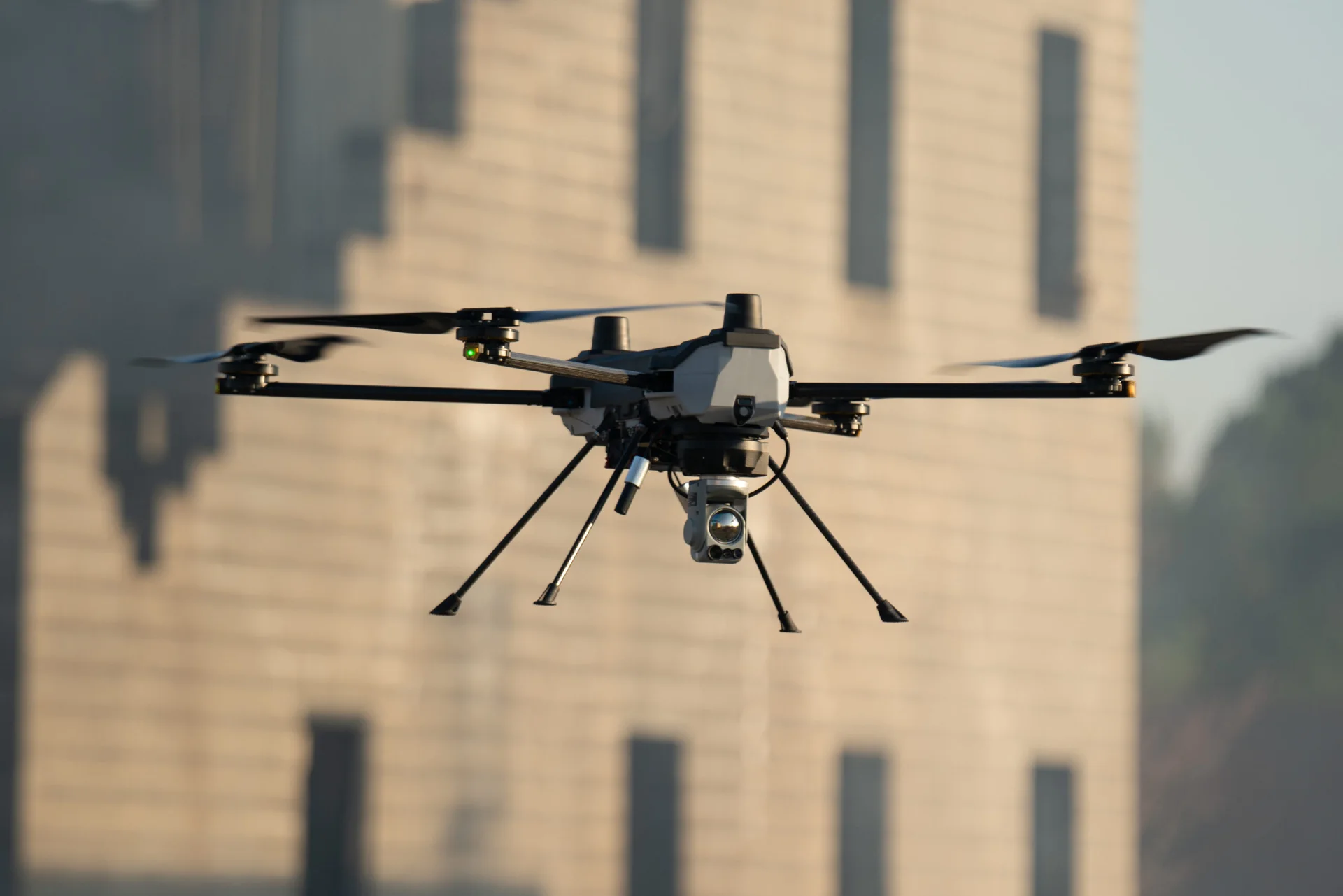
The global drone manufacturing industry is amid a rapid transition from a landscape that blends hobbyists and growing firms, to an increasingly sophisticated manufacturing sector.
Driven by conflict in Ukraine, the demand in Defense sector has intensified recently, especially for “attritable” drones, sometimes called low-cost attritable aircrafts (LCAAT), that allow for higher risk-taking and increased production volumes in combat conditions.
The rise of dynamic programs
Defense departments globally are identifying the need for an enhanced supply chain that can deliver drones at scale. The announcement in June 2025 of the American Drone Dominance program is a prime example of a program evolution with big implications for drone OEMs.
Initiatives like the US Drone Dominance program are accelerating the pace at which drone OEMs must iterate, and deliver on operational simplicity, pricing, design and manufacturing, procurement, delivery timelines and supply chain security.
Traditional defense acquisition cycles gave defense manufacturers long planning horizons and relatively stable specifications. Modern programs are dynamic, with specifications that may be refined in real-time as observed macro conditions change.
To meet the moment, drone OEMs must continue to evolve, adapting to changing expectations around UAV resilience, compliance, and demonstrated supply chain capacity.
A recent Axios Future of Defense newsletter on the US drone dominance program quoted Redcat CEO Jeff Thompson as pointing out the importance of demonstrating capacity and manufacturing capability, making the point that “the factory is the weapon”.
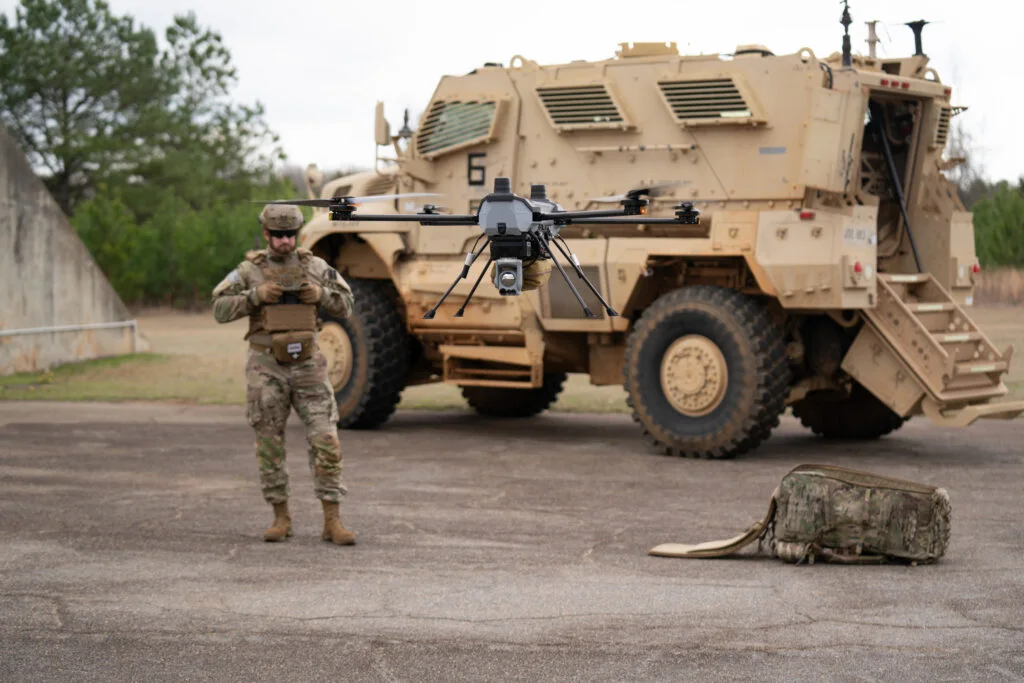
A soldier operates PDW Drone. Photo credits: PDW
Adaptive capabilities and modularity as differentiators
As these programs become more dynamic, the best OEMs are building adaptive systems designed to morph as the programs evolve.
OEMs must now assume that spectrum requirements may expand, resilience standards may tighten, and integration expectations may deepen between phases as is the case with the US drone dominance program.
Drone platforms designed around rigid hardware constraints will struggle to keep pace.
Communications as a Foundational Layer
One of the most significant shifts in the drone manufacturing sector is that OEMs have elevated communications from a subsystem to a core architectural layer.
The US Drone Dominance program messaging consistently highlights communications as a central capability for OEMs to deliver.
That emphasis reflects operational reality. In contested RF environments, connectivity determines whether autonomy functions as intended, whether telemetry remains actionable, and whether command and control are preserved.
Electronic warfare realities mean that drone operators face heavily contested environments where jamming and congestion are persistent factors, in addition to operators facing direct risk if their physical locations are evident while communicating with their autonomous machines.
Under these conditions, leaders procuring drone systems understand that they cannot focus solely on how radios and communications perform in ideal scenarios.
Drone OEMs must demonstrate that they can preserve critical links as conditions degrade, leading forward-thinking OEMs to integrate communications with intention into their system architecture.
They are exposing control and telemetry to higher software layers, enabling adaptive routing and prioritization, and ensuring that firmware upgrades can extend resilience over time.
Communications is no longer a late-stage optimization. It is a design foundation.
Architecting for Scale from the Start
New drone procurement programs in the defense sector introduce another critical requirement: the ability to scale rapidly.
Program messaging typically underscores the importance of production capacity, supply chain readiness, and pricing models that aligned with mass purchasing and deployment.
Drone manufacturers are internalizing this reality at the architectural level.
- Design: Design choices are now evaluated through the lens of manufacturability and repeatability.
- Component Selection: Components are selected based on long term availability. Communications partners are assessed for production capacity measured in hundreds of thousands of units per year.
- Price competitiveness: Pricing is modeled to ensure OEMs can support early phase targets while enabling cost reductions at scale.
Drone OEMs that can demonstrate their ability to scale as programs transition through phases differentiate themselves immediately.
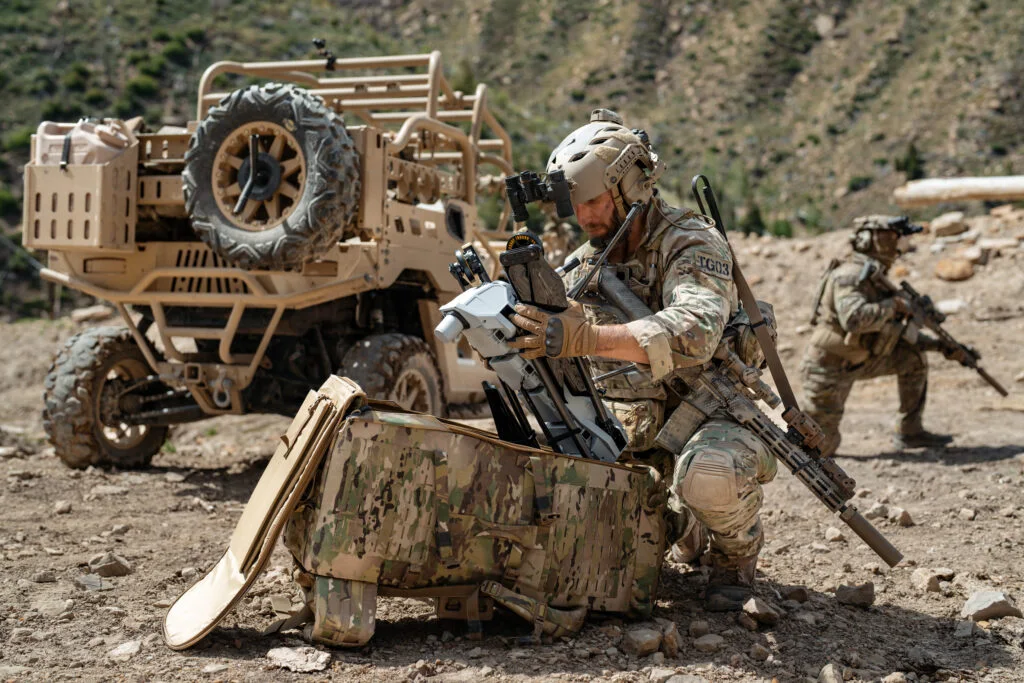
A soldier prepares to deploy PDW drone. Photo credits: PDW
Compliance and Integration as Competitive Differentiators
National drone procurement programs typically have specific requirements for complians.
Compliance credentials such as Blue UAS approval and NDAA alignment for example are embedded in the US Drone Dominance program messaging.
Drone OEMs are now designing drone platforms with compliance in mind, ensuring that radios, amplifiers, and supporting components align with evolving regulatory and procurement standards.
Integration is approached as an OEM native process rather than a bolt on exercise. Documentation, upgrade paths, and system transparency are treated as strategic assets.
When requirements shift between program phases, platforms built on compliant, well integrated foundations can adapt without triggering certification delays or redesign cycles.
The Systems Era of Drone Competition
The drone industry is entering a systems era. Success will be defined by how well hardware, software, communications, autonomy, and supply chain strategy are aligned.
Programs like the American Drone Dominance initiative are reinforcing this shift.
The OEMs that thrive will be those who design for adaptation, resilience, scale, and compliance simultaneously. They will appreciate the need to treat communications as a mission critical layer that underpins autonomous systems and will architect platforms capable of evolving through multiple program phases without losing momentum.
Learn more at https://go.doodlelabs.com/drone-dominance